Today, having a solid online presence is non-negotiable; it is a key element to any successful business. And if your platform doesn’t grab the attention of top-tier professionals, it is not going to last. The best recruitment website is easy to navigate, it is trustworthy, sleek, and offers a smooth experience. Want to find out how to create a recruitment website without hassle and a massive investment? This article takes you through everything you need to know: from recruitment website design to applicant tracking system and SEO.
Why every modern recruitment website needs to convert

Whether you are at an initial stage, only figuring out how to create a recruitment website, or already have a platform that is for some reason not performing very well, you should understand the most important factor: the ultimate purpose of your platform is to attract and acquire top talent successfully. If you do not put conversion as your primary goal, the whole website will never be a productive business. You will be left with an expensive digital catalogue instead. To avoid this, you need to make a flawless first impression; here’s where a user-friendly design with sleek, up-to-date appearance and authority-building content cannot be overemphasised.
The recruitment website design is a complicated, multi-layered task. It should feature clear value propositions and strategic positioning, unlike, for example, a standard job board integration, often facing issues, such as a lack of control, data ownership issues, limited branding opportunities, etc. Instead of spending an excessive amount of resources on figuring out what the best recruitment website practices are, you can get on board the online business game by opting for an efficient, modern solution – choosing a no-code website builder as the digital frontier of your online presence.
SpreadSimple: The fastest way to build a recruitment website
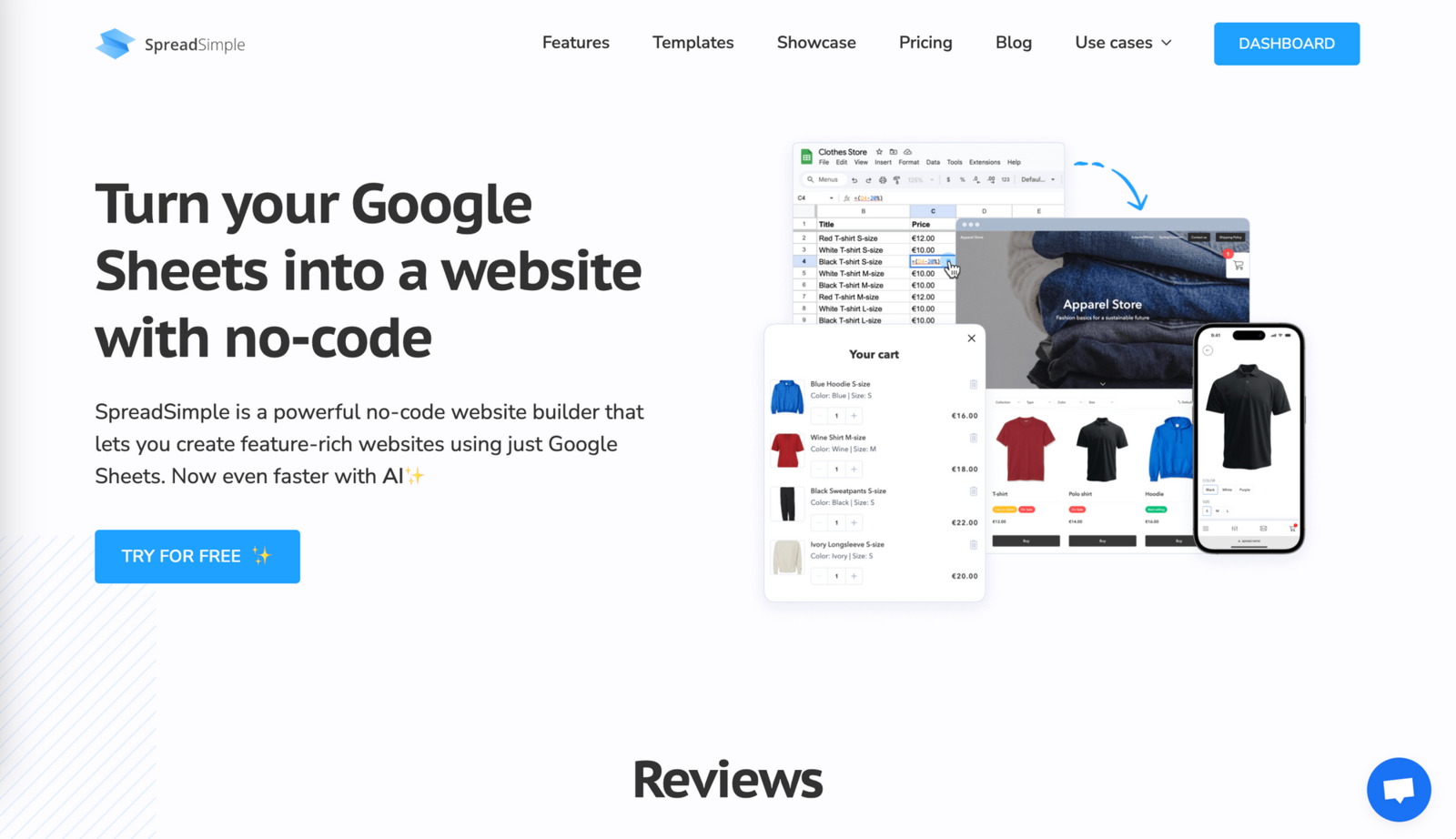
The no-code concept has caused a massive shift in website and app building, making it accessible for people without technical knowledge. It made it possible to join in the online milieu with a minimal initial investment. Some of the best 2025 no-code builders are Base44, Bubble, Softr, Glide, and SpreadSimple. Using SpreadSimple as an example, offers the fastest way to build a functional recruitment website with basic features like well-structured data, customizable job postings, and clear CTAs. It lets customers manage the SEO for recruitment agency websites and allows them to integrate ATS (applicant tracking system) into recruitment sites.
It sounds like a very complicated multiprocess that requires a big investment and a team of specialists. Actually, you can manage everything alone with SpreadSimple. The strategic advantage of this no-code website builder is that all that is required from you to get started is to fill in a Google Sheet. Other essential website settings are user-friendly and well-organized. Keep on reading to dive deeper into this topic.
Essential features of a high-performing recruitment website
When building an online platform, you should always focus on the following question: What are the key components of a successful website? Try answering it not only from the business’ perspective, but from the user’s point of view as well. What should a user-friendly design revolve around? Here are the main qualities to consider:
- User-friendly navigation & mobile responsiveness. When scrolling through job listings, a potential candidate expects a seamless experience, with an optimal layout and minimal load time. Web pages shouldn’t be cluttered by excessive elements, slowing down performance and distracting visitors from the content. In the SpreadSimple Design Tab, you can customize the visual appearance of your website to match your brand identity and maximize the functionality. Another crucial component of any website is mobile responsiveness. You can’t ignore it in 2025, when 96% of the internet users use smartphones to go online at least once a day, and around 60% of the world’s internet traffic is mobile. Building a mobile-responsive recruitment site is a must nowadays.
- Clear CTAs & easy application process. You want your recruitment website users to stay on your online platform longer. The best way to provoke their curiosity and enthusiasm is to add CTAs. SpreadSimple lets you customize the CTA buttons. But make sure to keep the balance: it is easy to overstep from being encouraging to being too pushy. The objective of a CTA button is to increase candidate engagement on job sites, leading to an application process. This is the final step, so you have to make sure that the user finds it easy to complete. The most logical customization choice for a recruitment website CTA button is the word Apply or Apply Now (if you want to highlight time-limited job offers on recruitment microsites for hiring campaigns). Upon clicking on it, the user should be directed to an application form. When setting up this feature in the SpreadSimple dashboard, you can add a Google Form, which is one of the best ways to collect information.
- Customizable job listings. To help users save time while searching through numerous job offers, you must have the filters and sorting features on your website. And when the applicant selects a few options, they should be presented logically, so that the future employee can understand in no time whether it's what they’ve been looking for. With SpreadSimple, you can customize job listings by using the built-in Markdown editor. Highlight the keywords, company values, required key skills, add links, images, and even videos, if necessary. Just keep in mind: too much information isn’t always good. Focus on representing brand identity on careers sites, providing the standard information, and the rest can be discussed with the applicant during their interview.
- Job alerts & real-time engagement. When a person is looking for a job, they do not have time to waste because they are looking for a reliable, long-term income source. This is why a top recruitment website always guarantees real-time engagement: instant reply to queries, blog posts with the most relevant tips for the applicants, etc. If you can’t provide 24/7 customer support, set up a chatbot to answer basic questions and forward the complicated ones so that the user doesn’t feel ignored. If the applicant didn’t find any job matches, you can still transform them into a recurring visitor by implementing job alerts. These automated notifications will inform the seeker when something suitable pops up.
- Employer branding & company culture. The foundation of any company’s appeal is its credibility. Therefore, you should focus on highlighting the core values of the company candidates can apply for on your online platform. If the recruitment website displays only job offerings for one company, you can add an informative About Us page with the company culture description. A separate section with employee feedback and rating is the most effective method for proving the company’s integrity. It takes years to strategically develop good employer branding, and maintaining a flawless reputation is even more difficult. Make sure that candidates instantly understand that it is a great place to work. Global recruitment websites post jobs for numerous companies. Adding a clear description of each company’s milieu will help applicants select the ideal offer.
- SEO: structured data & Google for jobs. Nowadays, not implementing SEO for recruitment websites is a shortcut to failure of any online platform. It will lose organic search visibility. The whole point of any online platform is its unlimited, global accessibility. Not optimizing your website and complaining that business is not going great is equivalent to opening an offline office in Monowi, Nebraska, and expecting a non-stop influx of clients. With SpreadSimple, you can achieve strong SEO results with multiple setting options: you can upload a favicon and a preview image, add meta title, meta description, meta tags for your details pages, image alt tags, header and footer with internal links, use URL aliases for categories, add unique descriptions with a good amount of key words, etc. To grow organic conversion, you can also directly integrate job posting-structured data with Google. The Google organic conversion rate can be more than 4 times higher, and the bounce rate for Google visitors can drop by over 10%.
- Content tools: blogs, videos, insightful resources. Upgrade your recruitment website by incorporating interactive videos, blog posts, and useful information for applicants. You can post interviews with professionals from the same field, telling about their work experience and sharing practical advice. You can use Riverside.fm to create remote interviews without all the hassle of post-production. If you have a YouTube channel, implementing TubeBuddy can help optimize and simplify creating content. Use Canva to produce captivating visuals, and its massive digital library of free customizable templates is a great choice for beginners with a limited budget.
Design elements that elevate candidate experience
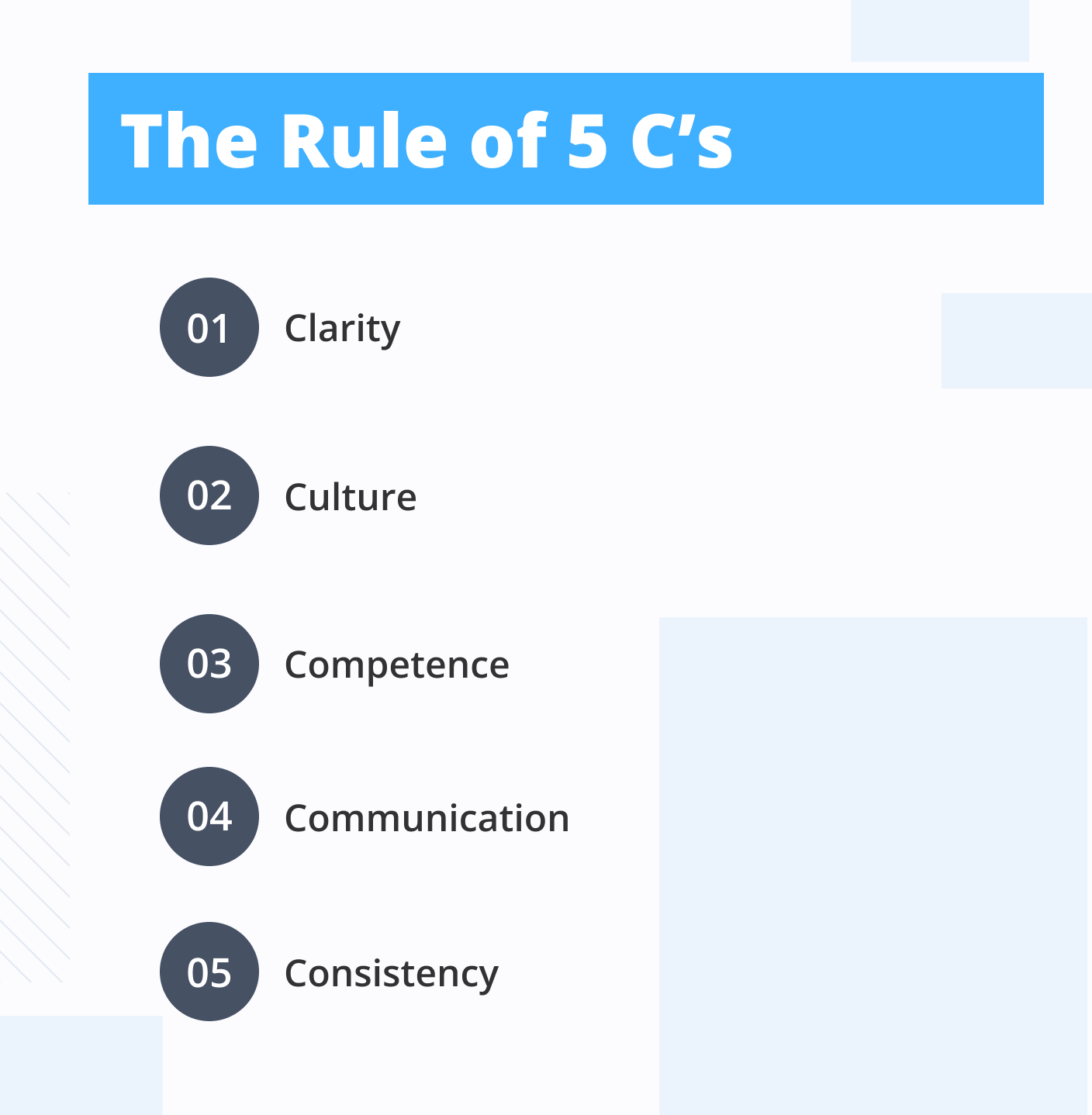
When creating a website, you need to center your efforts on trust-building design so that when the potential applicant lands on your platform, they are motivated to study it. Every new business enters a massive competition struggle. Make sure to follow the rule of 5 C’s: Clarity, Culture, Competence, Communication, Consistency. A clean layout with structured data for job postings recruitment, knowledge of basic color psychology, visual hierarchy, and trust-building design are major elements of the system.
Respect your audience's time and expectations: let the listings grid be easily accessible and intuitive, with clickable badges, a related jobs section, and in-depth information kept neatly within the details pages. You can study the depth of the visual impacts of a certain color on human behavior. Generally, blue color is associated with trust and professionalism, the calm shades of green symbolize sustainability and growth, and red is ideal for dynamic features, such as CTA buttons. For a clean, contemporary feel, you can choose white as the dominant color.
SEO & recruitment marketing strategies
We’ve already mentioned the crucial role of SEO in business growth. Now, let’s break down some of the specifics of Search Engine Optimization for recruiters. To make your job postings easily discoverable by the right audience, you need to do a thorough keyword analysis and regularly update your materials. To improve your website’s organic rankings, you must fix the most common errors, such as broken backlinks, thin content, poor internal linking, 404 errors, poor architecture of webpages, missing metadata, and the absence of H1 tags. Implement analytical tools like Google Analytics and Google Search Console that will help you see what is performing well and what isn’t.
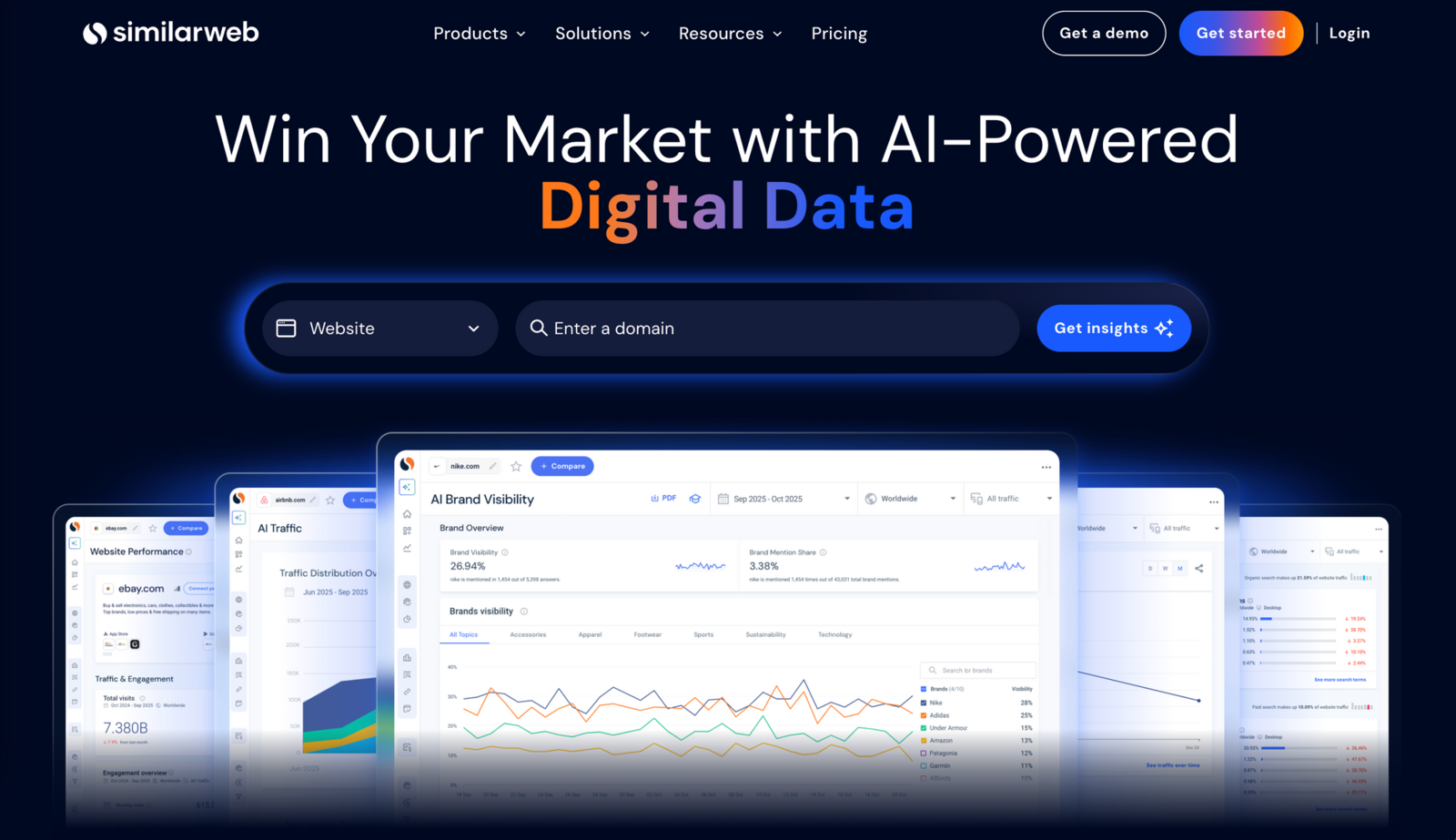
Regularly track performance with tools like Similarweb, GTMetrix, Hotjar, Ahrefs, etc. Study link-building tactics, including guest posting on other websites and blogger outreach. Top-quality links from credible websites in the recruitment industry show that your business is reliable. This increases brand awareness and maximizes your exposure.
Step-by-Step roadmap to launch
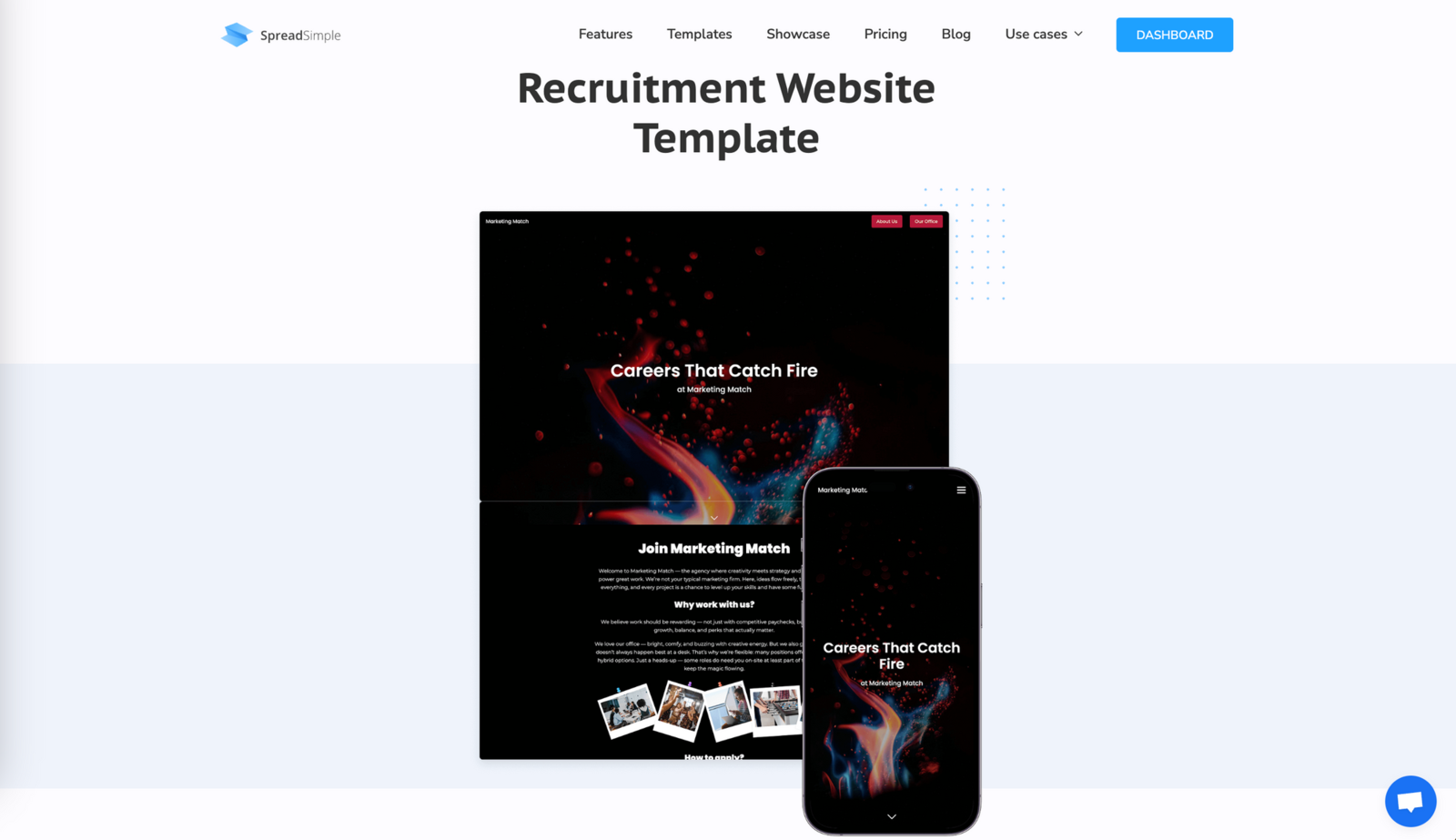
To launch your website successfully, start by identifying your target audience – a crucial step for the further website design strategy and marketing campaign. Next, select the CMS. Since we’ve focused on how to build a recruitment website with SpreadSimple, we will proceed with this no-code builder, but you can research the market and opt for any other tool that fits your purpose best.
With SpreadSimple, you don’t have to design wireframes – all the skeletal framework is already presented in its multiple templates. Just select what suits your brand and customize it. Keep in mind: your recruitment website will not function properly without a well-integrated ATS. This software application allows you to streamline all the steps of employee acquisition and onboarding. But the job is not done once the website is up and ready to launch. SEO optimization, system tracking, analysis, and updates are your constant responsibilities. It is a lot to handle, and if you have limited human resources, you can automate most of the processes using reliable AI tools.
Future-proof your site
When you build a website, you rely on the current demand. But how can you make sure that it won’t age quickly? An adaptable business strategy for your recruitment website should focus on users, not trends. Intuitive navigation design leading visitors to your desired CTA without too much information should be your priority: whether the user is operating a laptop or a smartphone, they should always be provided with smooth functionality of a clear, easy-to-use website design.
Let’s also not underestimate the power of social media integration – it is a modern way to stay closer to your audience and build more trust and recognition for your brand. Once you achieve the desired outreach, do not forget that your website will experience a traffic increase. It is essential to make sure that the website's performance and reliability won’t be compromised.
FAQs
- What to include on a recruitment website?
A recruitment website should include detailed job descriptions with filters and sorting, a well-structured job search function, an About Us page with testimonials and company culture highlights, applicant feedback, social media links, clear CTA buttons, mobile-responsive design, and concise application forms. However, the best recruitment website design tips and their structure will depend on your target audience.
- What is the difference between a company website and a career website?
While a regular company website focuses on promoting its products and services, a career site is dedicated to attracting talent and optimizing recruitment processes.
- How to promote a startup recruitment site?
The right promotion strategy for a startup recruitment site should include SEO, social media integration, paid advertising, email, content marketing, and network building. Based on your niche, try to find the best way to emphasize your startup’s value. But one factor remains the same: developing top-quality content strategy for recruitment websites is a primary element for its success.