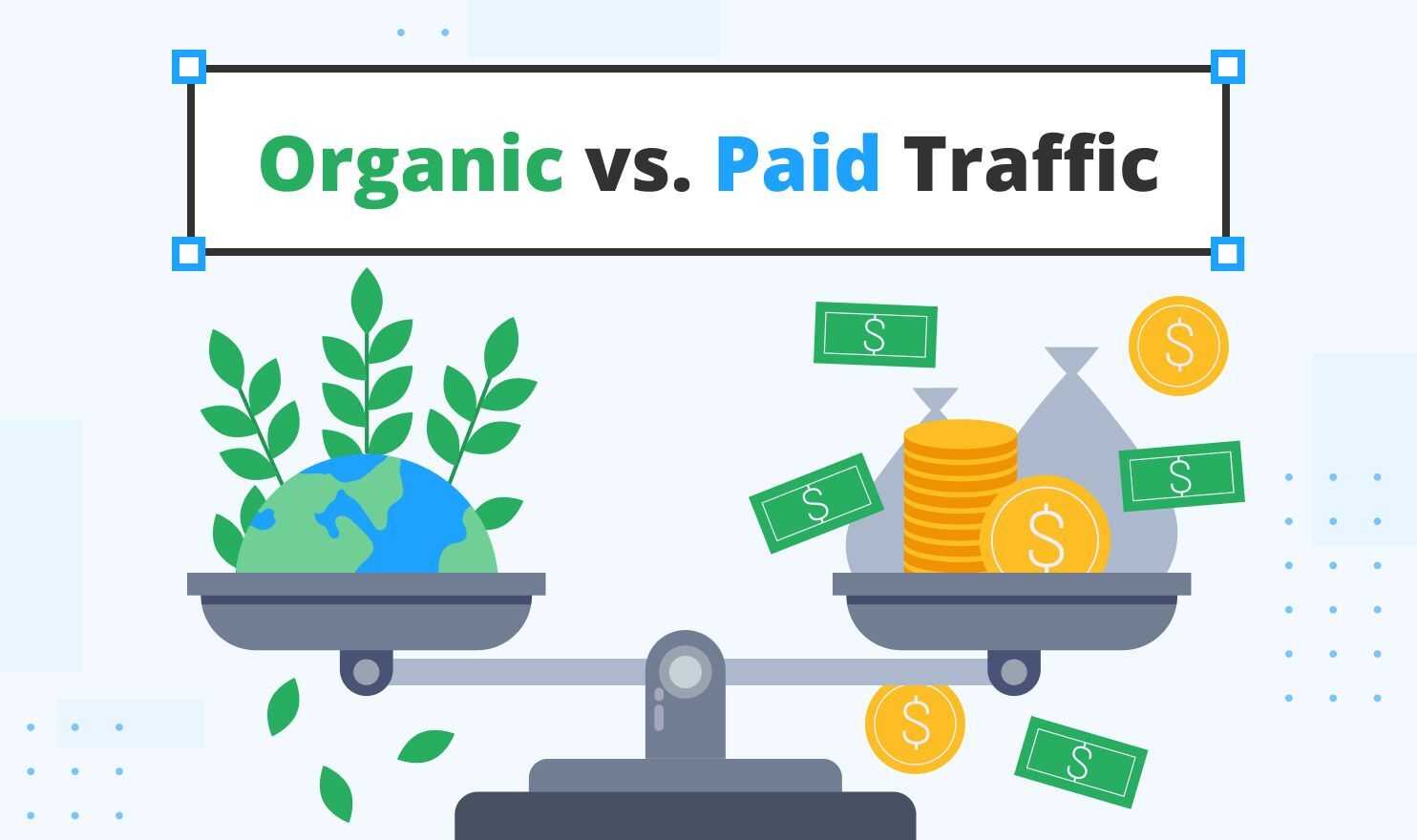
Nowadays, everyone goes searching for answers in the same place — Google, whether it is for something simple like how to bake a cake or for generating leads for your business. Of all the internet users, 81% address Google with their inquiries. This tech giant represents two completely different traffic sources — organic traffic and paid traffic. Though both are equally valuable in their own regard, in this article, we will talk about the difference between them and will try to find out which one is more beneficial to your organization.
Why organic website traffic is important?
Organic traffic is the traffic generated by users who have visited your website through different search engines such as Google, Yahoo, Bing, etc. Paid traffic refers to the traffic that has been directed to your webpage, after users have clicked on an advertisement that you have paid for.
Organic traffic is the most important type of traffic that every business should try to achieve, as it is targeted in nature. When a user types a query in a search engine, they are looking for a specific answer. If your webpage, blog, or content is the solution they are looking for, it will make it more likely for you to gain a potential customer, subscriber, or follower for your business.
Some of the other benefits of organic traffic are:
- It generates higher customer trust
- It increases brand awareness
- It is the most cost-effective marketing tool
- Higher conversion rate
- It improves brand loyalty
- ROI (Return on Investment) is higher than paid traffic
As we have already mentioned, users trust Google, and websites that have a higher position on Google organically are trusted by visitors. This means that it is more likely to convert an organic visitor into a potential customer than a visitor from any other source. Let’s proceed and dive deeper into how to generate organic traffic.
How to get Organic Traffic?
As mentioned already, there are two primary ways to get traffic from search engines – organic and paid traffic. The best way to acquire more organic traffic is to follow proven methods of SEO practices. SEO stands for “Search Engine Optimization” and it is the process to help your website rank higher on the search engine results page.
There are many ways to do this, but we will be covering the most important ones:
Publish content for Users and not for Search engines
A visitor looks for information with very specific intent. As an organization, your job is to match the intent of the user with the right kind of information. Hence, user intent should be your top priority when creating new or updating old content. To do so, you need to understand the type of intent your content is generating. Google has several algorithms to detect user experience on websites, if you can write meaningful information that creates a good user experience, then your page will rank higher organically.
Include relevant keywords in your title and webpage
The title of your webpage or blog is one of the most critical SEO factors. Search engines use your title to get an idea of what your business or content is all about. A good page title that includes terms that a visitor can recognize, encourages them to click and visit your website. To achieve this, you need to do keyword research and find the keywords that are specific to your brand. Including these keywords in your titles, blogs, posts, and webpages will help you rank higher in search engines.
Keep in mind that pages that target several keywords or no keywords at all are very unlikely to receive any organic traffic.
Building links from other websites
Backlink building is a good way to boost organic traffic. Link from other relevant websites act as votes of trust for the search engine algorithm and in turn, improve the organic ranking of a website. As per the latest research, a backlink is the 3rd biggest ranking factor for Google search algorithms. One way to boost your link-building is by encouraging clients, friends, family members, suppliers, and fellow bloggers to link to your website. The more incoming links you have from trustworthy websites, the higher your site will rank in the eyes of search engines.
Create user-friendly websites
Website usability is a direct and indirect SEO factor when it comes to ranking. Every company needs to build websites that load fast, are mobile-friendly, and are free of technical errors. A slow website that takes longer than 3 seconds to load, will make 40% of its users abandon the webpage. Search engine will also lower the website’s ranking if it finds that users are spending less time on the website. This ultimately affects organic traffic as it reduces your webpage’s visibility. Hence, a vital factor is to build a website that provides a better user experience. To help create SEO-friendly websites that rank higher in search engines, you can use no-code website builders like SpreadSimple for their intuitive and convenient functionality.
Start Blogging
Blogging is the most effective way to increase organic traffic. It is a brilliant tool that helps you reach your audiences in a better and deeper way than your website alone can. With well-written blog posts, you can create a catalog of content that is centered around your business. Blogging with keywords-specific content can get you more organic searches, as visitors on search engines are looking for helpful content for their queries. Another way to do this is to read, review and link to other people’s websites and blogs, especially those who are operating in your market, and in return they might do the same, which will attract more prospects for you.
The Difference between Organic and Paid traffic
The primary difference between organic and paid traffic is that organic traffic is free while paid traffic is not. You pay the ads platform every time someone clicks on your ad from the listings and visits your site. Some of the other key differences between them are:
- Organic Traffic takes from 4 months to generate while paid traffic is instant and can be generated within 15 minutes.
- The learning curve is higher with organic traffic, as it requires knowing your audience, keyword research, and developing content. Paid traffic only requires the decision to choose which channel to use for advertising.
- Organic traffic has a much higher ROI (Return on investment) and conversion rate as compared to paid traffic.
- Paid traffic is beneficial for new product introductions and short-term promotions, while organic traffic is more useful in the long run, as the payoff is substantial once a company has invested time in building traffic organically.
While the two traffics cost nearly the same amount of money to a company, the number of resources, time investment, ROI, and conversion rate are exponentially different between the two. Most businesses will benefit from investing in a strategy that involves a mix of both, organic and paid traffic.
Benefits of Organic Traffic
If you ask any company about its organizational goals, they will most likely include creating brand awareness, building the credibility of the product, educating its customers, building loyalty with existing clients, and generating demand. Organic traffic is one of the most vital components that satisfy all these goals. Let’s explore the benefits of organic traffic:
- Organic traffic is the biggest contributor to website traffic — According to Brightedge research, of all the trackable website traffic, 53% comes from organic searches.
- Organic traffic brings quality leads – Visitors from organic searches are looking for solutions to their query, which means they have an intent to buy, making them quality leads.
- Organic traffic has a higher conversion rate and results in sales – With quality leads, the chance of conversion from potential client to sales is higher.
- Organic search improves customer retention and loyalty – As organic traffic builds brand awareness and trustworthiness, customer loyalty also increases.
- Organic search is the most cost-effective way of distributing content – Spending on blogging and SEO costs nearly the same as advertisements, but the ROI is exponentially higher with organic traffic.
Disadvantages of Paid Traffic
The method of acquiring paid traffic is known as search engine marketing (SEM). When a consumer does a Google search, the results on the top of the page are from paid advertisements. Despite a little box next to the title stating “ad” or “sponsored”, many visitors are unaware that these are advertisements. For this reason, paid traffic has become popular in recent years. But paid searches also have some disadvantages that we would like to bring to your notice.
- Paid Traffic is costly — in a competitive market the cos- per-click (CPC) is high, and you will need to spend a lot of money on ad campaigns before you start seeing viable results.
- Paid Traffic needs to be constantly monitored — to manage a PPC (pay-per-click) account you need to make daily or hourly checks to ascertain whether your strategy is working or not. This is very time-consuming and expensive for small and medium enterprises.
- Paid ads are viewed as spam and in turn, affect brand building — visitors view advertisements as a form of spam or disruptive in nature. This causes consumers to have little trust in your brand, which can be harmful in the long run.
- Paid Traffic is charged per click and not per lead — each click through your advertisements costs the company some money. Only 2-5% of clicks will most likely lead to a sale, which results in a low ROI.
Conclusion
Organic and Paid traffic both are needed for an organization to succeed. If you are looking for a fast way to generate leads or bring awareness to a new product, then paid ads would be useful. But if you want sustainable long-term growth, organic searches are the better option. The answer to which strategy to apply depends on your business goals and objectives.
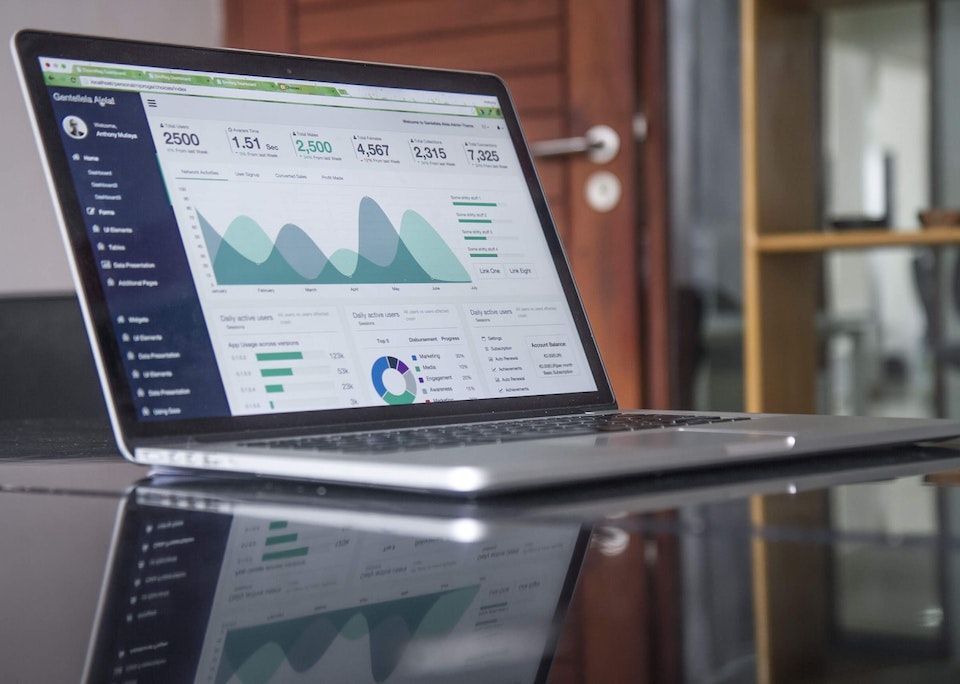
A good analytics program will help understand which marketing to use and move forward with. The ideal way to divide your resources would be to use a combination of organic and paid traffic and analyze the results.
Hope our article has been helpful for you to make a more informed decision!