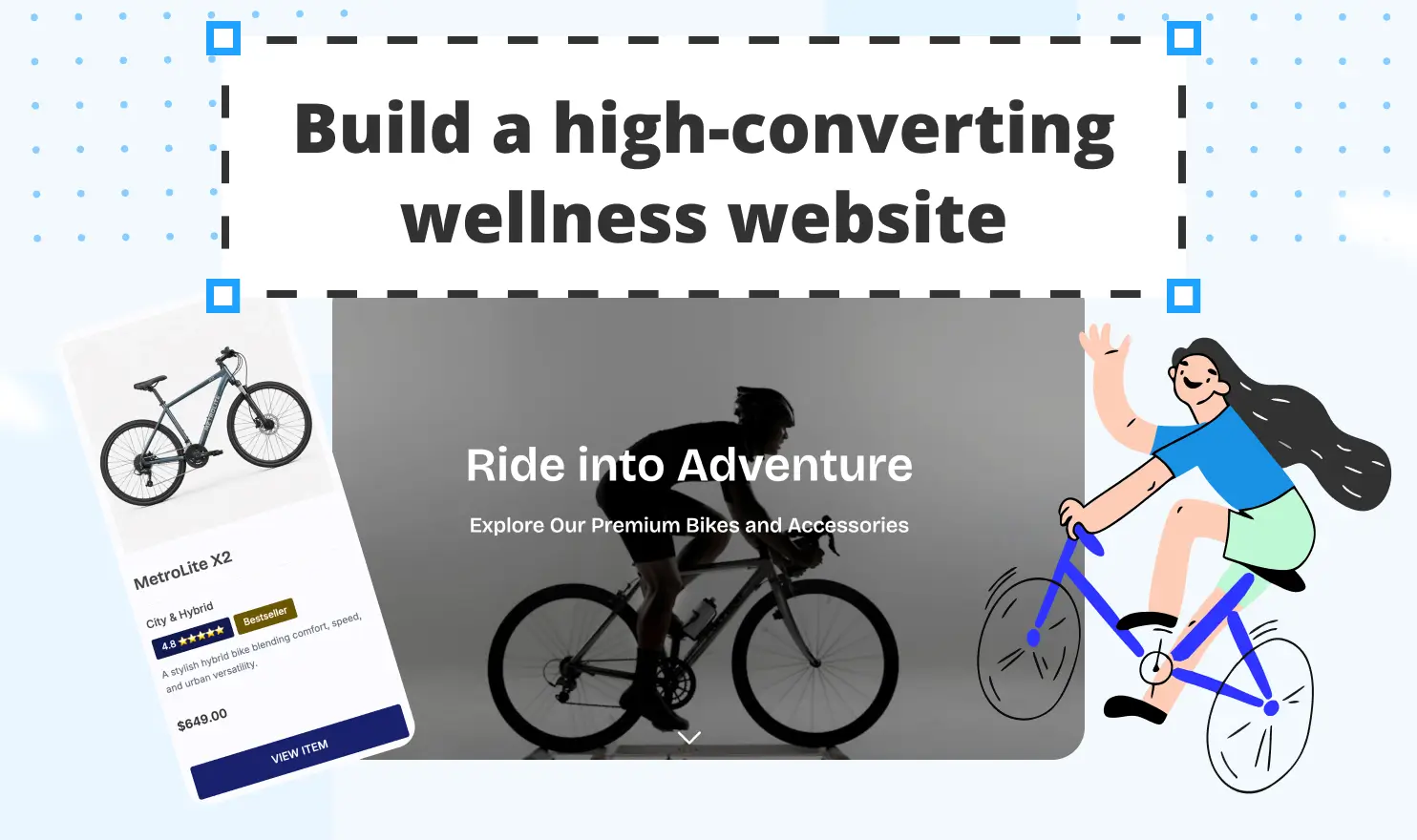
While most people claim that the IT industry generates the most revenue, it is the wellness industry that is worth more — $6.8 trillion global in 2026 (opens new window), to be precise. The numbers alone sound like a compelling reason to boost your business by creating a functional, sleek, and modern website (Spoiler alert: free website builder solutions ahead).

What are the main wellness sectors?
Before picking the intricate design elements let’s break down the gargantuan “wellness” term into subsectors. It is important to categorize everything from the start, because a pilates studio, for example, will require a completely different set of website features than an online nutrition shop.
Here are the major categories (opens new window) people invest into globally nowadays:
- Physical activity
- Healthy eating, nutrition, and weight loss
- Personal care and beauty
- Wellness tourism
- Public health, prevention, and personalized medicine
- Traditional and complementary medicine
- Wellness real estate
- Mental wellness
- Spas
- Springs
- Workplace wellness
Most entrepreneurs typing “how to build a wellness website” in the search bar already have a project: they run a yoga studio, teach dance classes, or manage a wellness products store; they need an online platform for organizing and scaling the business.
Choose the wellness site structure that matches your niche

Based on all the above-mentioned categories, we can divide the functional structure of your future platform into three shapes:
- A class-based studio (yoga, dance, pilates, group fitness) needs a schedule at the center of the site, with class detail pages and a booking flow.
- A retail or product business (supplements, wellness gear, equipment, cycling and fitness products) needs a searchable catalog, filters, and a shopping cart, closer to a standard e-commerce store than a studio site.
- A hybrid (a studio that also sells gear, memberships, or retail products alongside classes) needs both a schedule and a catalog, usually as two separate sections of the same site.
Getting this right early avoids the common trap of building a generic web page that is chaotic and doesn’t provide an organic hierarchy of information leading to conversion.
What "conversion" actually means for a wellness website

Before picking colors, fonts, animation, or templates, it helps define an overall purpose of your platform. A wellness website converts when a visitor completes one of a small number of actions: booking a class, buying a product, or signing up for a trial, for example, are typical procedures you want your visitors to cap off. Every element on the page, as well as all the design decisions combined, should naturally move someone toward that action.
These three things tend to separate a wellness site that converts from a shallow yet pretty-looking digital space:
- A clear, current event calendar or catalog. Visitors decide fast. If they can't immediately see what's on offer, when it runs, and what it costs, most will leave rather than keep inquiring.
- A short path from interest to booking. Every extra click, form field, and especially "contact us for pricing" message loses a percentage of visitors. The best wellness sites let someone see a class or product and act on it within two or three clicks.
- Visible trust signals. Wellness is a very personal matter, and people are trusting you with their body, time, and money. Instructor bios, real photos, reviews, and a clear cancellation or refund policy do more for conversion than trendy powdered pastels by Pantone.
Speed and mobile-friendliness matter here more than in most industries, since a large share of wellness searches happen on a phone, often with "near me" requests, or right before a class starts. A slow-loading schedule page costs bookings in a way that's easy to underestimate.
The three SpreadSimple templates below are worth looking at even if your business isn't a literal dance studio, yoga studio, or bike shop; the structure is what's transferable and applicable to any wellness niche.
Dance studio websites: built around the schedule
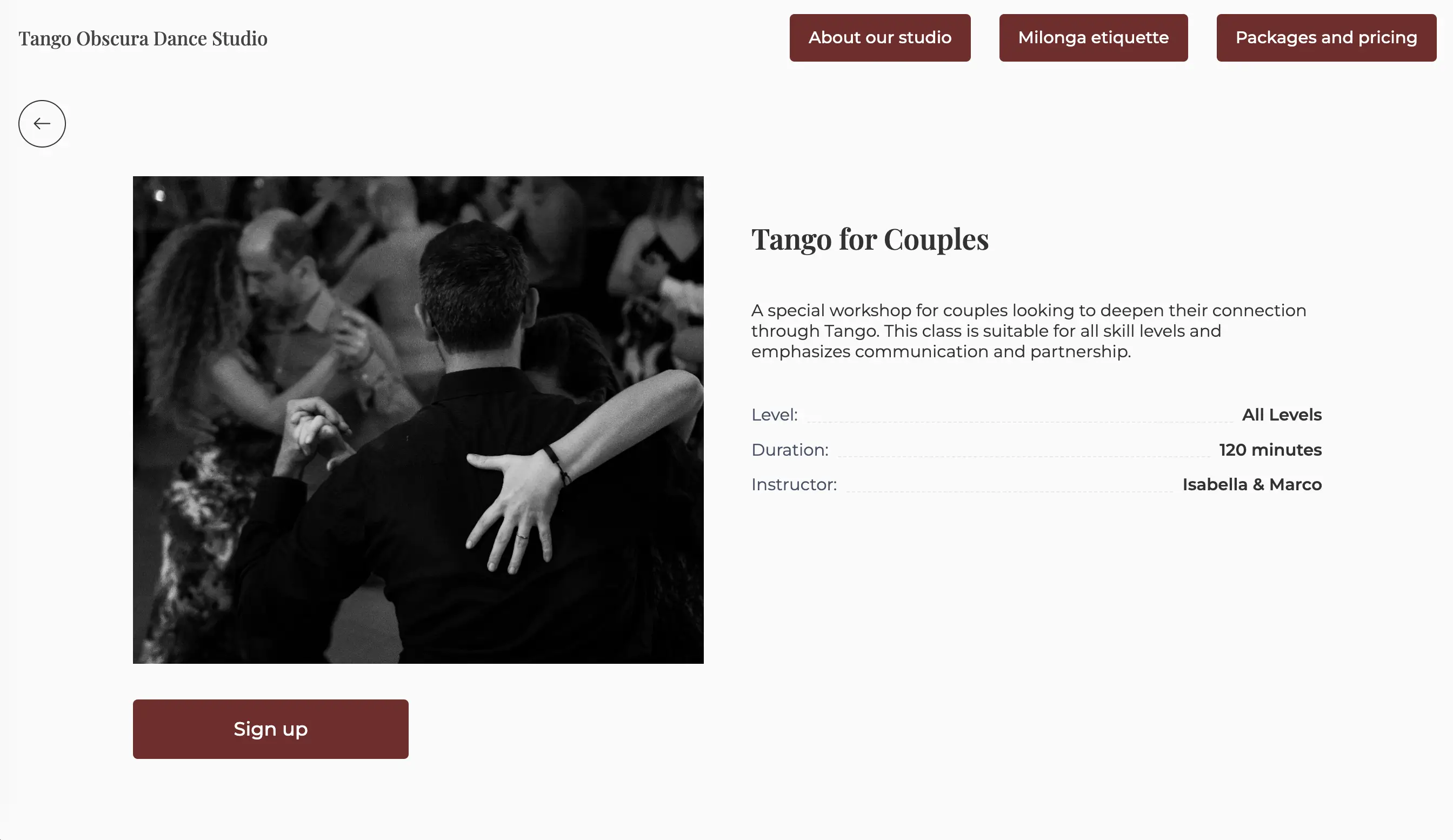
For a dance school, ballet studio, or any lesson-based business, the calendar is always the key feature. People searching "dance classes near me" or "beginner ballet classes" want to see, in seconds, what's running this week and whether it fits their schedule.
A dance studio website built for this niche typically includes:
- Search and filters, so visitors can narrow classes by style, level, or instructor.
- A calendar view, for an improved planning experience.
- Detail pages for each class, covering level, duration, instructor, studio location, etc.
- Related items, so someone looking at a beginner hip-hop class also sees other classes at a similar level.
- An embedded order or enrollment form, so signing up doesn't require a phone call.
SpreadSimple's Dance Studio website template is built specifically around this structure: the class schedule can be displayed as either a calendar or a traditional list, and every class row lives in a connected Google Sheet, so updating a time slot or adding a new instructor is a spreadsheet edit rather than a website rebuild. It's a solid starting point for dance schools, gyms running group classes, art or craft workshops, music lesson studios, and theater or acting schools — anywhere the business revolves around a scheduled session someone needs to find and book.
What makes this niche specific: dance and lesson-based studios convert on fit, not just availability. A parent searching for a children's ballet class cares about level and instructor more than price; an adult searching for a beginner salsa class cares about whether it's intimidating or approachable. That's why filters by level and style matter more here than in most other wellness niches. They let a visitor self-select into the class that actually matches them, rather than emailing to ask.
Yoga and fitness studio websites: built around packages, not just classes
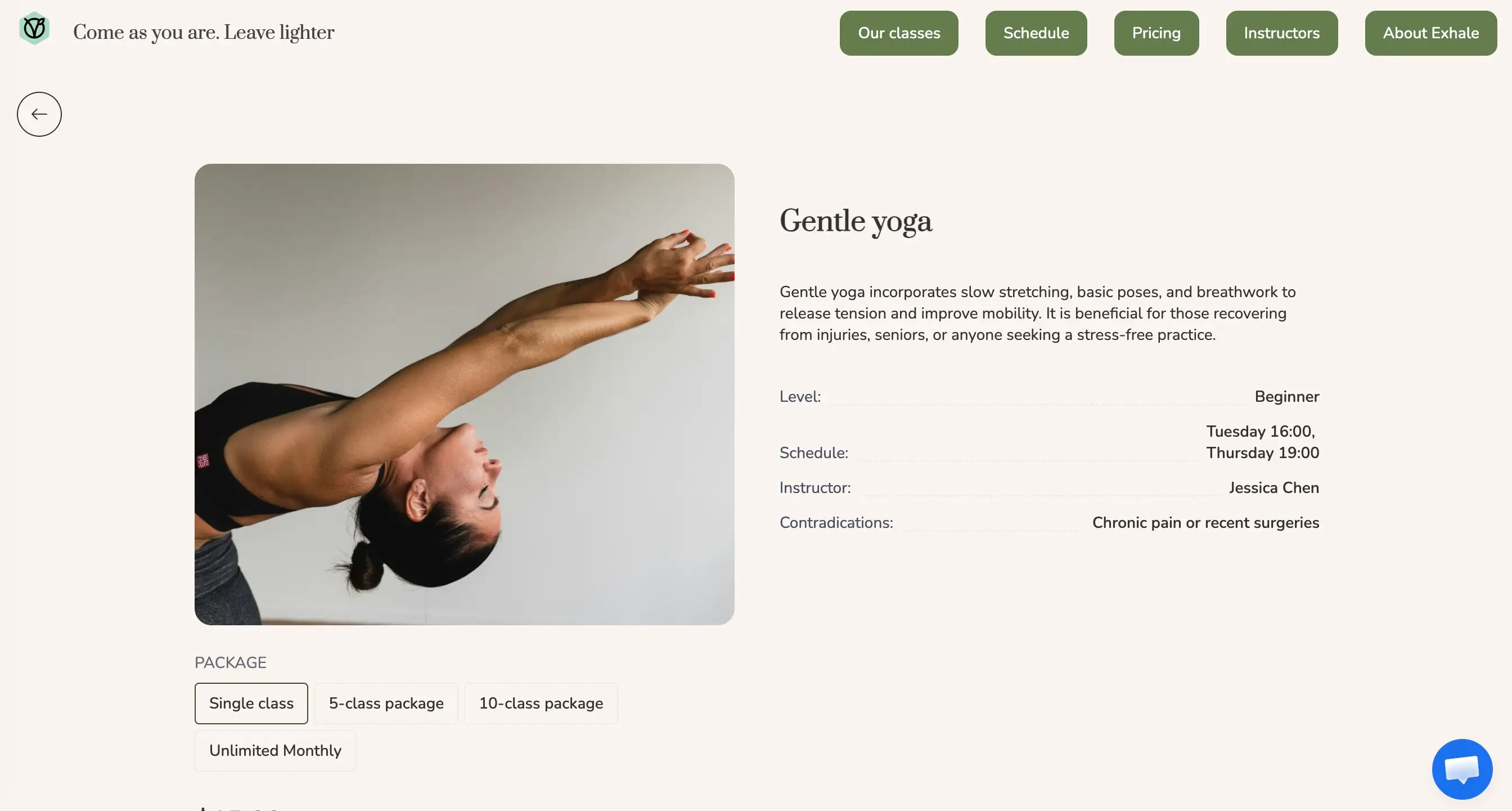
A yoga or fitness studio shares the scheduling need of a dance studio, but the buying decision looks slightly different. Fewer people buy a single yoga class the way they'd sign up for one dance lesson. Usually, they are looking for a membership deal. (For a step-by-step build focused on this niche, see our guide on how to build a yoga studio website.) That means the website's job shifts slightly: less about discovering a class, more about picking the most appealing option when it comes to payment.
A yoga studio website built for this needs:
- A searchable, filterable class or product grid.
- Detail pages with flexible package options — drop-in, class packs, and memberships shown side by side on the same page.
- A promo code feature, useful for the "first class free" offer that most studios run to convert first-time visitors.
- Order forms that handle these variable pricing options without extra plugins.
SpreadSimple's Yoga website template covers this directly: each class's detail page includes selectable package options, so a visitor can choose a single drop-in session or a discounted bundle from the same screen.
Like the dance studio template, everything is managed from a Google Sheet, so updating pricing, adding a new class type, or launching a seasonal promo code doesn't involve the site's code or design changes. It works equally well for pilates studios, boutique fitness clubs, and boxing or martial arts gyms — any business selling recurring access.
What makes this niche specific: yoga and fitness studios lose more conversions to pricing confusion than dance studios do, simply because there are more ways to pay. A visitor who can't tell whether the $25 they see is per class, per week, or per month will often just leave rather than ask. Showing package options clearly on the class page, not buried on a separate pricing page, is one of the highest-impact changes a fitness or yoga site can make.
Online wellness retail and gear stores
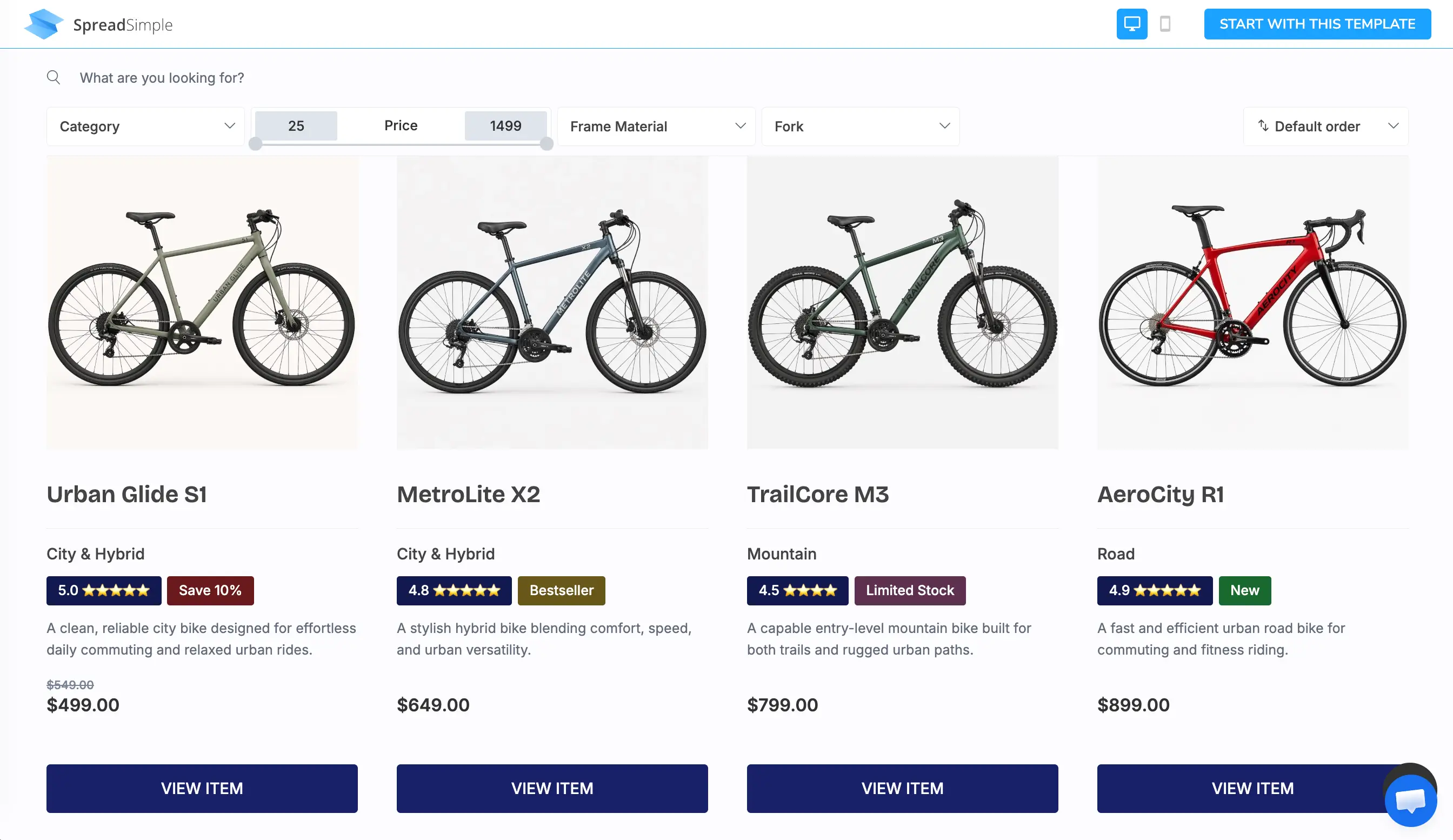
Not every wellness business structure necessarily needs an event calendar and sign-up forms. Selling wellness products, such as supplements, cycling and fitness gear, sports equipment, etc. has obvious similarities with a standard online store, and it needs specific e-commerce features to manage inventory and orders.
The bike store website template is a useful blueprint, applicable for a wider niche, because cycling and fitness retail share the same core need: customers comparing technical products want detailed specifications before they'll add something to a cart. A wellness-adjacent retail site built this way typically needs:
- Category pages and a full product grid with filters, sorting, and a search bar.
- A price range filter, so shoppers can narrow results to their budget without scrolling the whole catalog.
- Detailed product pages for specifications, materials, sizing, and compatibility — the kind of detail that turns a browser into a buyer for technical items.
- Stock limitation, which automatically disables the "Add to cart" button on sold-out items, preventing overselling without manual stock checks, causing customer complaints.
- A working shopping cart and order form, plus support for product variations like size or color.
SpreadSimple's Bike Store website template includes all of this out of the box, and while it's built for cycling shops, the same structure fits any wellness retailer selling physical products with real specifications — gym wear with multiple size and color variants, supplement lines with detailed information, or fitness gear brands. Like in any other SpreadSimple template, the catalog lives in Google Sheets, so adding a product, adjusting a price, or marking something out of stock doesn’t require developer’s involvement.
What makes this niche specific: retail wellness sites convert on comparison, not discovery. A shopper isn't asking "what's available this week" the way a class-based visitor is. They're comparing two or three specific items against each other on price, specs, and availability. That's why the price filter and detailed product pages are key elements of your online store.
The pages every wellness website needs, regardless of niche
Regardless of your business model, almost every high-converting wellness website includes the same core pages:
| Page | Why it matters |
|---|---|
| Homepage | States what you offer and for whom within the first screen |
| Schedule or catalog | The core of the website for most wellness businesses; needs to load fast and filter easily |
| About / instructor or team page | Builds trust before someone commits money or time to a stranger |
| Individual class or product pages | Where the actual booking or purchase decision happens |
| Pricing or packages | Clear, upfront pricing outperforms "contact us" every time in this industry |
| Testimonials or reviews | Especially important for wellness, where trust and safety concerns are higher than average retail |
| Contact / booking form | Should take under a minute to complete: long forms are a leading cause of drop-off |
| Blog or resources | Supports SEO and answers pre-purchase questions (what to wear to your first class, how to choose a bike size, etc.) |
A blog section is worth calling out specifically. The majority of wellness searches are driven by informational intent. A number of well-written posts answering the most common questions both attract early-stage searchers and give you internal links back to the relevant class or product page.
SEO structure that matches how people actually search
Across every wellness sub-type, the search patterns follow a predictable shape: [niche] + [modifier] + [location or intent]. Structuring your pages around this pattern is what actually earns first-page rankings.
Keyword patterns to build pages around:
- Niche + location: "yoga studio in [city]," "bike shop near me," "dance classes [city]"
- Niche + audience: "yoga for beginners," "ballet classes for adults," "kids' bikes"
- Niche + intent: "drop-in yoga classes," "book dance lessons online," "buy road bike online"
- Niche + comparison: "yoga vs. Pilates," "road bike vs. hybrid bike," "ballet vs. jazz classes"
Practical steps that apply to all three niches:
- Give every class, style, or product its own URL and title tag. This is what lets you rank for narrow, high-intent searches.
- Use descriptive, keyword-rich page titles, since this text is what shows up directly in Google search results.
- Add short content pages answering common questions in your niche. This is where you can capture people who are still researching, before they're ready to book or buy.
- Keep the site fast and mobile-first. Google's ranking systems and most wellness searchers both prioritize mobile-optimized pages, and a slow schedule or catalog page loses visitors before they even see your pricing.
- Fill in image alt text and meta descriptions for every class and product page.
Common mistakes to avoid when building a wellness website
- Hiding pricing behind a "contact us for rates" page. In every wellness sub-type covered here, visible pricing (or a visible price range) converts better than forcing an inquiry just to find out the cost.
- Treating the schedule or catalog as static. A stale class calendar or an out-of-stock product still shown as available destroys your credibility in no time.
- Skipping niche-specific trust signals. A dance school without visible instructor bios, or a bike shop without stock accuracy, loses the exact trust that decides whether someone books or buys.
- Building one homepage instead of a site structure. Relying on a single page to rank for every keyword in your niche is the most common reason wellness websites stay invisible in search.
Wellness website monetization tips

Once the core site is live, most wellness businesses can add revenue paths without rebuilding anything:
- Class packs and memberships, sold directly through the same package options used on class detail pages.
- Gift cards or vouchers, a strong seasonal add-on for studios and retail alike.
- Retail add-ons for studios — mats, apparel, or supplements sold alongside classes.
- Loyalty pricing, such as a discounted rate for pre-paid multi-month packages, which also improves retention
- Affiliate or partner content on the blog, linking to complementary local businesses or products. To get more information on how to build and affiliate store with SpreadSimple, check out our video tutorial:
FAQs
How do I create a wellness website without coding experience?
Use a no-code website builder such as SpreadSimple, where the site's content lives in a connected Google Sheet.
What should a wellness website include?
At minimum: a homepage that states your offer clearly, a schedule or product catalog, individual class or product pages, an about page with instructor or team information, transparent pricing, testimonials, and a fast booking or contact form. A blog section helps with SEO but isn't essential at launch.
Which template fits my wellness business?
If your business runs on a class schedule with instructors and time slots, the dance studio template fits lesson-based businesses; the yoga studio template fits businesses selling packages, drop-ins, or memberships. If you sell physical wellness or fitness products, a retail template like the bike store one, built around product specs, filters, and stock control, is the closer match.
How much does it cost to build a wellness website?
With a no-code builder, a functional wellness website can be built for free on a basic plan, with paid tiers unlocking a custom domain, more products or classes, and removing builder branding. This is significantly cheaper than custom development, which typically starts in the thousands for a comparable feature set.
How do I get my wellness website to rank on Google?
Focus on local and niche-specific keywords: "yoga studio in [city]" rather than "yoga studio," keep your schedule or catalog updated regularly, add alt text to photos, and publish a small number of genuinely useful blog posts that answer questions your potential clients are already searching for.
Start from a SpreadSimple template to save effort and money
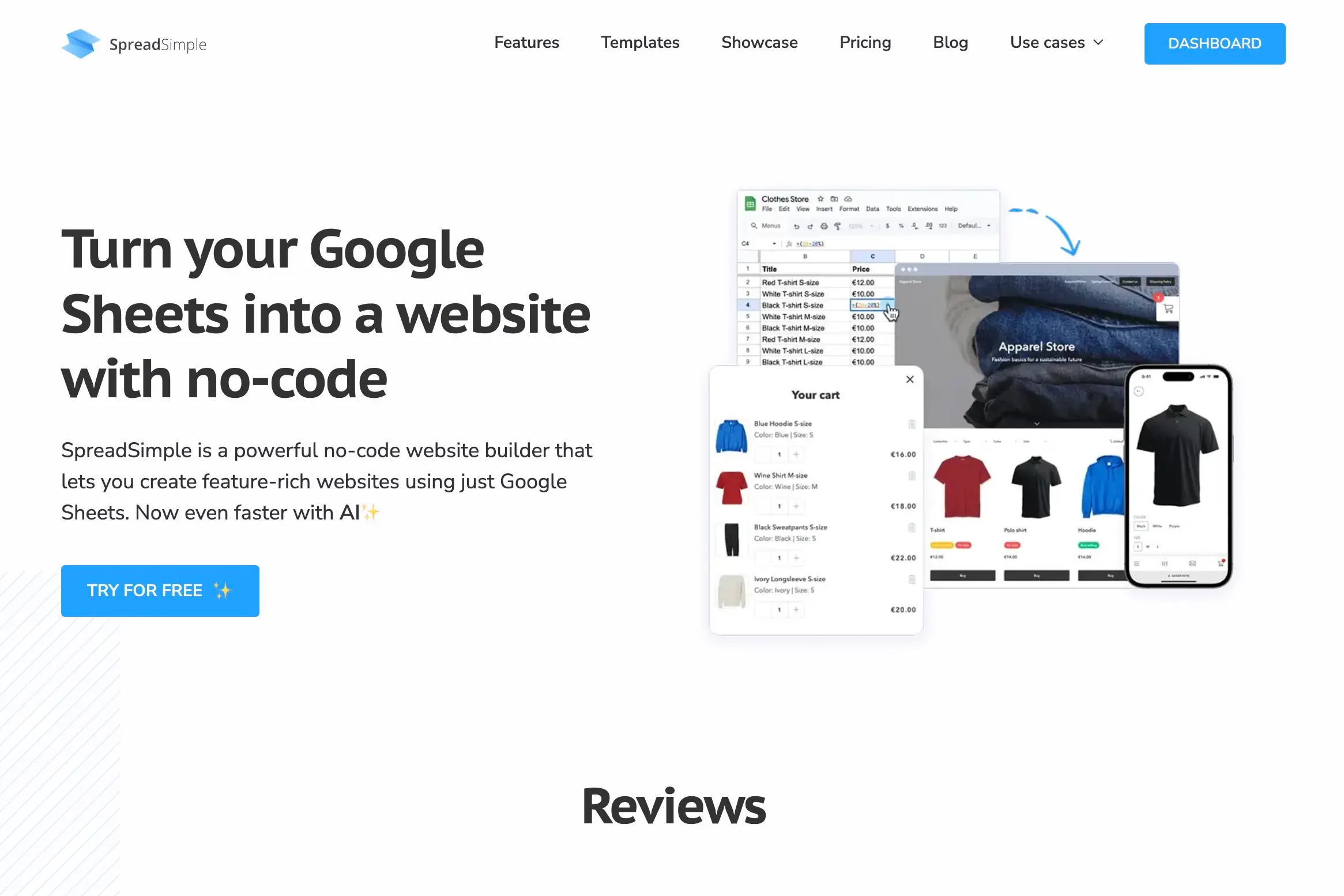
Building a wellness studio website doesn't require starting from scratch or hiring a developer. SpreadSimple's Dance Studio, Yoga Studio, Bike Store, and other templates cover the three main shapes a wellness business takes: lesson-based, package-based, and retail. Each one runs on a Google Sheet you already know how to use. Pick the structure that matches how your business actually sells, fill in your own classes or products, and the schedule or catalog updates itself from there.