How to start a wholesale online store in 2026 (+ Best products to sell online)
To start a successful wholesale online business that generates sales you must remember these key aspects: choose products retailers want to reorder, structure pricing that works for B2B, and create a user-friendly, intuitive online catalog that is easy to navigate and trustworthy. In this guide, we walk you through each of these essential stages in a simple, beginner-friendly way. Let’s get to it!
The difference between wholesale vs. retail online

Wholesale means selling products to businesses at bulk in discounted prices, while retail targets individual shoppers with single units. It sounds like a small distinction, but it changes almost everything about how you build and run the business.
A few of the biggest differences:
- Who's buying? Direct-to-consumer (DTC) customers are individuals making emotional, often one-off purchases. Wholesale buyers are business owners who care about margin, reliability, shelflife and whether your product will actually sell.
- Order size. Wholesale runs on minimum order quantities (MOQs) and case packs rather than single-item add-to-cart purchases.
- Pricing logic. Retail pricing is about what a shopper will pay today. Wholesale pricing has to leave room for the retailer's own markup, which usually means selling at roughly half of the final retail price.
- Revenue pattern. A good wholesale account reorders every month or every season. A DTC customer might buy once and never come back. That's why wholesale, done right, tends to produce more predictable cash flow over time.
- What the website needs to do. A DTC platform needs to convert browsers into buyers in a single session. A wholesale site needs to give a retail buyer enough information — pricing tiers, MOQs, specs, etc. For buyers, a purchase becomes an initial stage in their business framework, while DTC customers conclude the chain of actions with clicking on a Buy button.
Product selection matters even more in wholesale than in DTC. A viral TikTok product might sell out in a weekend for a direct-to-consumer brand, but a retailer won't stock something without a reorder pattern, thin margins, or unpredictable demand. Think of products needed on a daily basis, don’t try to be overly creative and unique. Picking eco-friendly single use cups targeting the F & B milieu might not seem revolutionary, yet it checks boxes of high margin, stable reorder pattern, and predictable demand. We can’t stress enough: Always focus on these three qualities when looking for a product to sell.
How to find the best wholesale products to sell

This piece of advice is a direct derivative from the prior statement: validate demand the way a buyer would before committing money to inventory. Let’s break it up into 4 simple steps.
1. Look for real demand signals
Check search volume trends for the category over the last one – two years. Look at what's already selling on B2B marketplaces like Faire or Global Sources, and pay attention to reorder frequency: consumable products (skincare, supplements, packaged goods) tend to generate repeat purchase orders far more reliably than one-time purchases like home décor. Separate seasonal spikes from evergreen demand and look for product categories that sell steadily.
2. Check whether the margin actually works for wholesale
This is where a lot of new wholesalers get it wrong. In wholesale, you're generally aiming for a 40 – 60% gross margin on your cost of goods. Commodity products (things anyone can source from the same overseas factory) often only support a 10 – 25% margin, which isn't enough once you factor in shipping, storage, and other factors.
The standard model to know is keystone pricing: your wholesale price is roughly 50% of the suggested retail price. So if you want a product to retail for $50, you need to be able to sell it wholesale for around $25, and that $25 still needs to comfortably cover your production cost, packaging, and overhead.
3. Look at the competitive landscape
At first glance, you might assume that this step contradicts the whole premise of not trying to be overly creative and unique that we pointed out above. But every business idea needs thorough research, and wholesale business is not an exception. Can you source the product reliably, at consistent quality, from more than one supplier? Is the category already saturated with near-identical private label products, or is there room to differentiate? And what's the actual entry barrier: do you need certifications, licenses, or large upfront MOQs from your own suppliers just to get started?
4. Make sure the business is operationally realistic
Bulky or fragile products cost more to ship and store; perishable or short-shelf-life products add restrictions in terms of fulfillment timing. And regulated categories like supplements, cosmetics, anything making health claims come with compliance requirements that must be studied thoroughly before committing.
Before you commit to a category, validate it first. Try to pre-sell to a handful of buyers before placing a large inventory order. It's a lot cheaper to find out an item doesn't move before you've bought 500 units of it.
Top wholesale product categories for 2026 (with data)
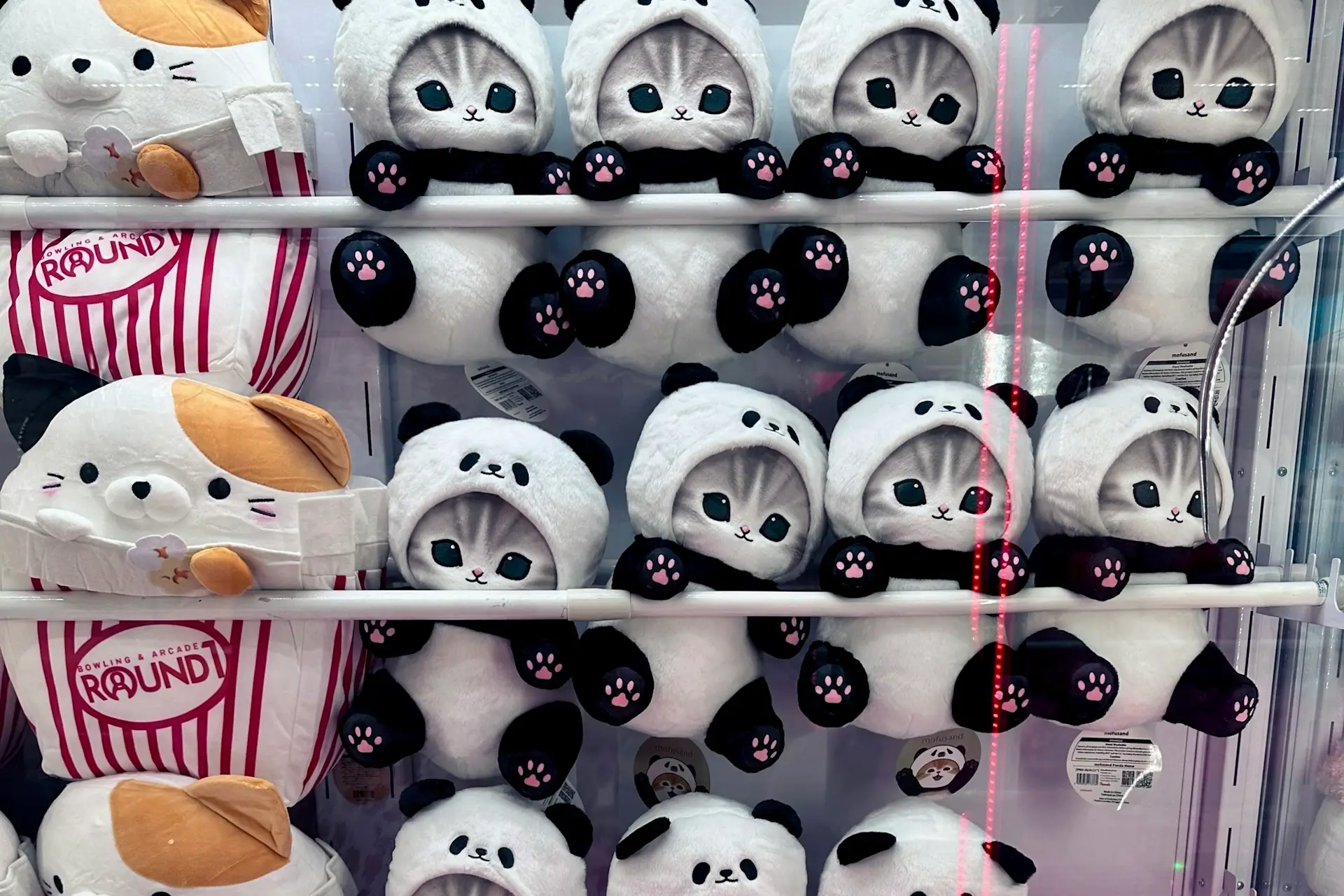
Based on current market trends and B2B buying patterns, these categories continue to show strong wholesale demand, workable margins, and consistent reorder tendency in 2026.
Skincare and beauty products

Why it works for wholesale: Beauty remains one of the most consistently reordered wholesale categories: buyers restock every few weeks as products get used up, and margins on well-formulated skincare regularly clear the 40 – 60% target. Spas, salons, boutiques, and independent retailers all buy in this category, which gives you multiple buyer types to sell into.
B2B considerations:
- Typical MOQ: 6 – 24 units per SKU for a first order
- Regulatory notes: ingredient labeling and, in some markets, FDA/cosmetic registration requirements apply
- Private label opportunity: strong — many manufacturers offer white-label formulations
- Reorder frequency: high
Best subcategories: organic and clean skincare, professional salon lines, K-beauty imports.
Apparel and accessories
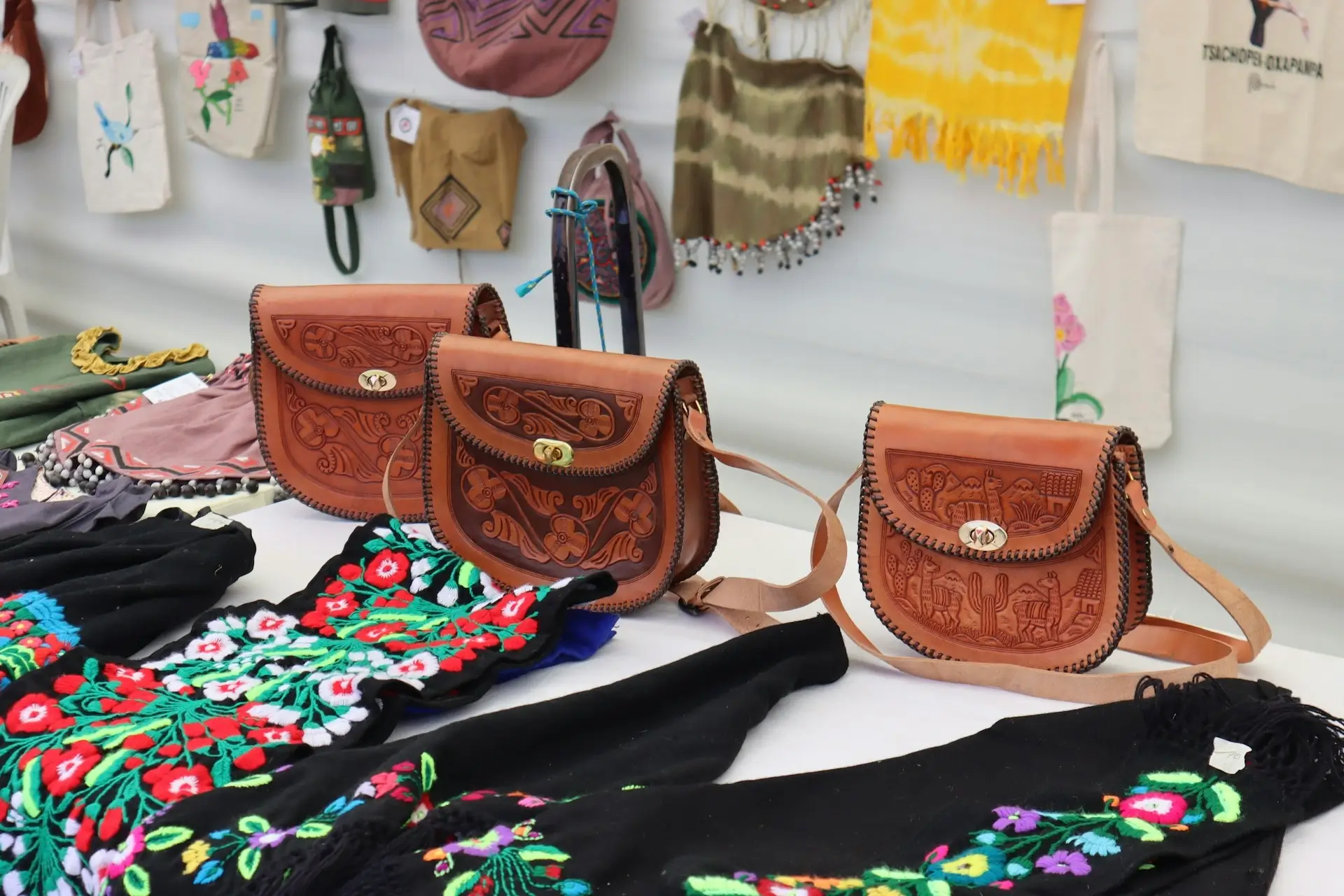
Why it works for wholesale: Boutiques and independent shops still rely heavily on wholesale buying to fill their racks each season, and apparel supports healthy margins when it's not competing purely on price. It's also one of the largest wholesale categories by dollar volume, simply because of how much variety retailers need to carry.
B2B considerations:
- Typical MOQ: often set per style/color, e.g., 6 – 12 units per size run
- Regulatory notes: minimal, aside from care-label and fiber-content requirements
- Private label opportunity: moderate to high, depending on manufacturing relationships
- Reorder frequency: seasonal (medium)
Best subcategories: basics and essentials, sustainable/organic fashion, boutique-exclusive prints.
Supplements and health products

Why it works for wholesale: The wellness category has kept growing, and supplements are a textbook consumable. Buyers reorder because customers run out and come back. Margins can be strong, especially with white-label formulations.
B2B considerations:
- Typical MOQ: often higher than other categories due to manufacturing minimums (100+ units per SKU is common)
- Regulatory notes: label claims are tightly regulated; work with a supplier who understands compliance in your target market
- Private label opportunity: strong — this is one of the most common white-label categories
- Reorder frequency: high
Best subcategories: vitamins and daily essentials, protein and sports nutrition.
Car accessories

Why it works for wholesale: The aftermarket auto parts and accessories space has a steady base of buyers — auto shops, detailing businesses, and online retailers — who reorder consistently because these are functional, replacement-driven products rather than trend-driven ones.
B2B considerations:
- Typical MOQ: varies widely by product, from single-digit case packs to pallet-level minimums for heavier items
- Regulatory notes: minimal for most accessories; safety-related parts may need certification
- Private label opportunity: moderate
- Reorder frequency: medium, with seasonal spikes (winter accessories, summer detailing products)
Best subcategories: detailing and care products, interior accessories, universal-fit parts.
Activewear and fitness gear

Why it works for wholesale: Gyms, studios, and boutique fitness retailers are consistent wholesale buyers, and the category benefits from genuine brand loyalty: buyers often stick with a supplier once fit and quality are proven.
B2B considerations:
- Typical MOQ: similar to apparel, usually set per style and size run
- Regulatory notes: minimal
- Private label opportunity: moderate — fabric and construction quality is a bigger differentiator than branding alone
- Reorder frequency: medium to high, tied to new class/season launches
Best subcategories: performance basics (leggings, tops), studio-branded merchandise, recovery and accessory items (bands, mats, bags), sports equipment (balls, protectors, etc.).
Choose your specific niche
Beauty products are not a niche but an entire industry. Organic skincare for wellness spas is a niche. The more specific you get, the easier the rest of the business becomes: buyer targeting gets sharper, supplier relationships get easier to build around a focused product line, and you come across as the specialist rather than one of a hundred generalist sellers competing on price.
There are three main ways to narrow down:
- Vertical specialization — instead of "beauty products," go salon-only.
- Geographic specialization — focus on a region, or decide whether you're building a domestic-sourced brand versus an import-based one.
- Buyer-type specialization — independent boutiques versus national chains, brick-and-mortar versus online-only retailers, or a specific vertical like spas, cafés, or gyms.
A simple framework to work through: pick a category from the list above, then narrow it by vertical + buyer type + differentiation. "Skincare (vertical) + independent spas (buyer type) + fragrance-free formulations (differentiation)" is a business you can actually build a sales pitch around.
Validate products before committing capital
Unlike inventory, product ideas are cheap. Before placing a large order, run through these three steps:
Step 1: Test with 1 – 3 SKUs. Don't build a massive product catalog before you know anything sells. Pick a small, representative set and source samples or a small first batch.
Step 2: Pre-sell to potential buyers. Reach out to 10 – 15 target retailers with a simple line sheet and your proposed terms, and treat their feedback as real market research. If you can secure 2 – 3 confirmed orders before placing a bulk order, you've de-risked the whole launch.
Step 3: Calculate the real unit economics. Your true cost is never just the product price. Add shipping, storage, and payment processing, and be honest about your break-even point. If you're planning to offer net-30 terms, map out the cash flow timeline too, since you'll likely be paying your supplier well before your buyer pays you.
A practical example: say you want to sell organic skincare wholesale. You test with three SKUs — a cleanser, a serum, and a moisturizer — and put together a simple one-page line sheet. Contact fifteen local yoga studios and spas. If three or more come back interested, that's your signal to place a real first order.
Set wholesale pricing, MOQs, and payment terms

Pricing
The standard starting point is keystone pricing: wholesale price equals roughly 50% of the manufacturer's suggested retail price (MSRP). From there, work backward to make sure your own cost still leaves room for a healthy margin.
| Your cost | Wholesale price | Markup / margin | Suggested retail (MSRP) | Retailer's margin |
|---|---|---|---|---|
| $10.00 | $25.00 | 2.5x cost / 60% margin | $50.00 | $25.00 (50%) |
A few pricing tools worth using once you're past a single flat price:
- Tiered pricing — offer a lower per-unit price at higher order volumes, to reward larger buyers.
- MAP (Minimum Advertised Price) — protects your retail partners from being undercut by discounters, and protects your brand's perceived value.
MOQs and MOV
A minimum order quantity (MOQ) ensures every order is actually profitable once you account for shipping, packing, and payment processing. First orders commonly range from $100 – $500, with reorders often set slightly higher, from $250 – $1,000. You can set MOQs per SKU or as a total order minimum. Many wholesalers offer a lower or no-MOQ sample pack specifically to make it easier for a new buyer to test the waters.
A minimum order value (MOV) works similarly but is based on total dollar amount rather than unit count, which gives buyers more flexibility to mix SKUs while still guaranteeing you a profitable order size.
Payment terms

Net 30, net 60, and net 90 are standard in established wholesale relationships, meaning the buyer pays 30/60/90 days after the invoice date. For new buyers without a track record, it's common to require payment upfront or a deposit-plus-balance structure until trust is established.
Keep in mind: net terms mean you'll often pay your own suppliers before your buyers pay you. Factor this lag into your working capital planning from day one, not after your first cash flow crunch.
What a wholesale website needs
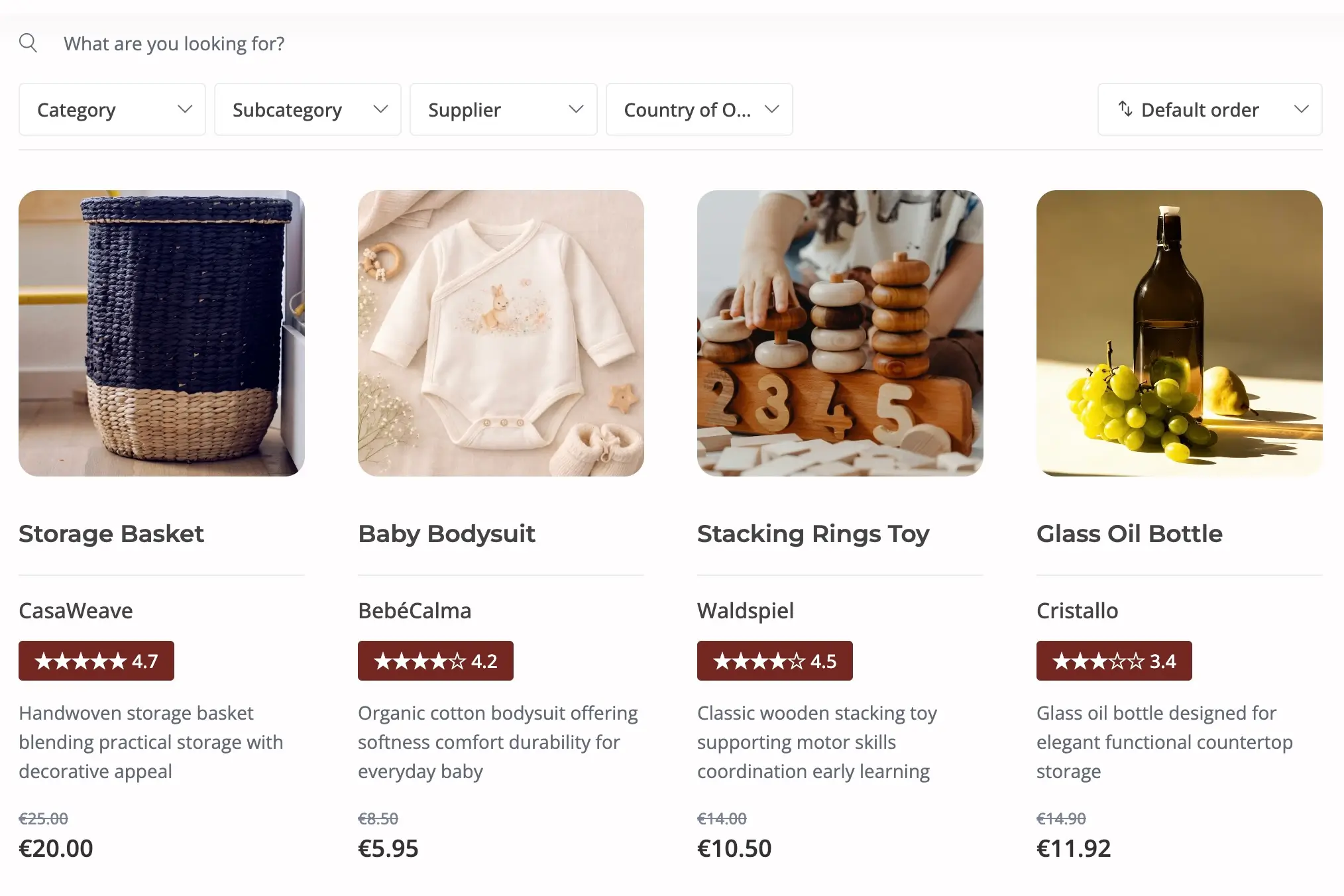
The core difference is focus. A DTC store is built to convert a single visitor into a checkout in one session. A wholesale website is built to give a professional buyer everything they need to justify a purchase order, which often means information-density over slick marketing tricks.
Here's what that actually looks like in practice:
- A browsable, filterable catalog organized by category and subcategory, with filters for product type, price tier, MOQ, and new arrivals.
- Professional product pages with wholesale price shown clearly (or gated behind a buyer login), MOQ and case pack quantity per SKU, bulk pricing tiers if applicable, technical specs, and multiple product images.
- A downloadable line sheet like a PDF version of your catalog with pricing, SKUs, and specs that buyers can save, forward internally, or bring to a trade show.
- Inquiry over cart: most B2B relationships start with a quote request or "contact for bulk pricing" rather than an instant checkout. A cart can still make sense for established, repeat buyers.
- Buyer account features, including login access, order history, and volume-based pricing tiers.
- B2B trust signals: an "about" page focused on your business rather than a personal brand story, any trade show presence, your wholesale terms and return policy, and relevant certifications.
| DTC website | Wholesale website |
|---|---|
| "Add to cart" CTA | "Request quote" or inquiry form |
| Single-item pricing | Bulk pricing, MOQs, case packs |
| Consumer-friendly copy | Professional B2B language |
| Fast checkout focus | Relationship-building focus |
| Reviews from consumers | Testimonials from retailers |
Build your wholesale catalog from Google Sheets with SpreadSimple
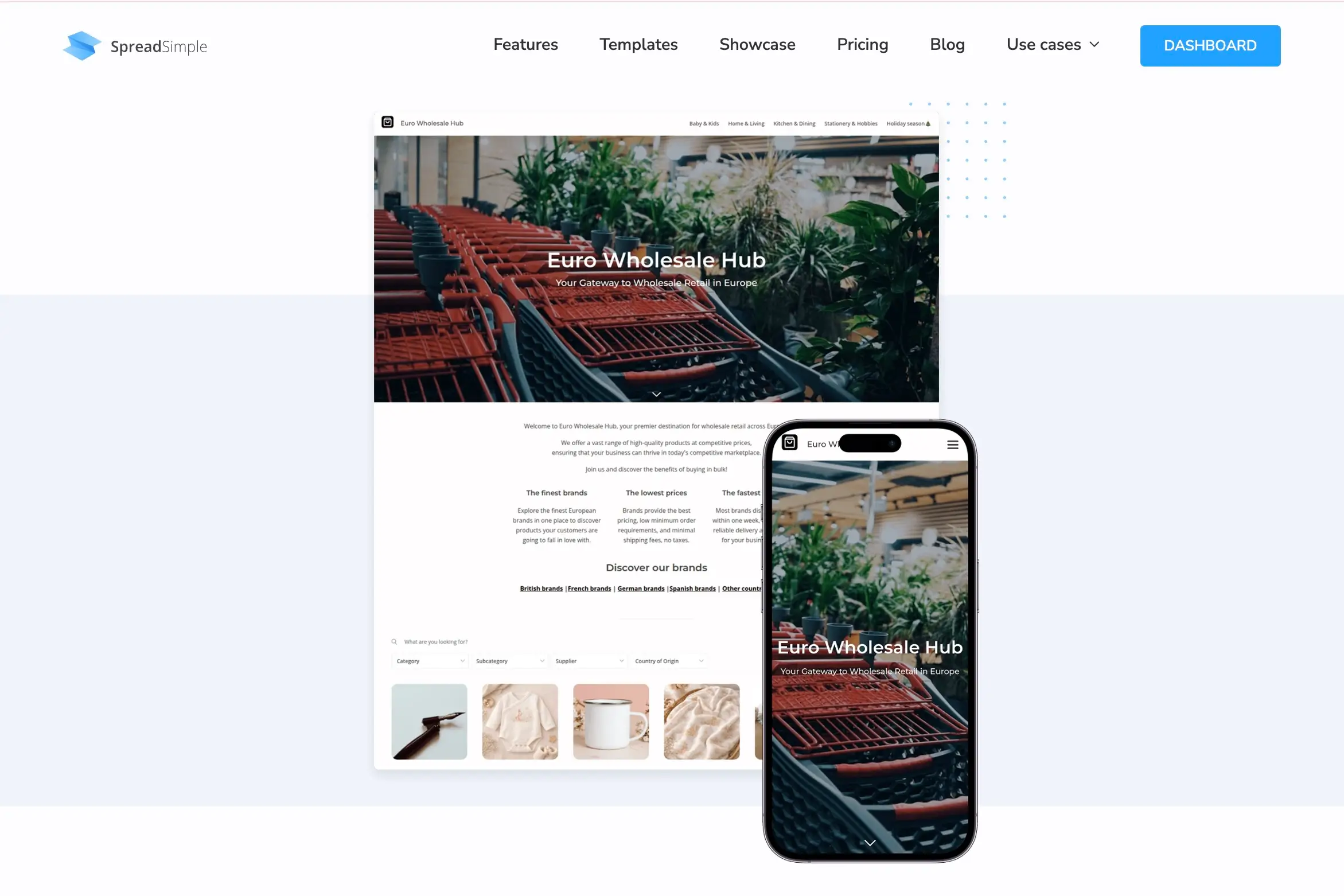
Here's the shift in thinking that makes wholesale catalogs manageable: your inventory spreadsheet can become a modern, fully functional live website.
A solid wholesale product sheet typically includes:
- SKU / Product ID
- Product name
- Category / subcategory
- B2B-focused description
- Wholesale price
- MSRP (suggested retail)
- MOQ per SKU
- Case pack quantity
- In stock / availability
- Product image URL(s)
- Specifications (size, weight, materials, etc.)
Once you're comfortable with the basics, a few optional columns add real flexibility: tiered pricing for volume discounts, buyer-specific pricing if you're managing key accounts individually, a private-label-available flag, and lead time in days.
With this approach, price changes across an entire product line take minutes, and you don’t need to hire a developer for simple daily changes. Your team can collaborate on the same sheet in real time. You can use formulas to calculate margins and pricing tiers automatically instead of doing the math by hand for every SKU. And because the line sheet and the website pull from the same source, exporting an updated PDF catalog is just a matter of exporting the sheet.
This is exactly the gap that SpreadSimple is built to close: it turns a wholesale product spreadsheet into a professional B2B catalog website, with updates syncing automatically instead of requiring manual edits to a web page every time your inventory changes.
SpreadSimple Wholesale Store template — build your B2B catalog in 20 minutes
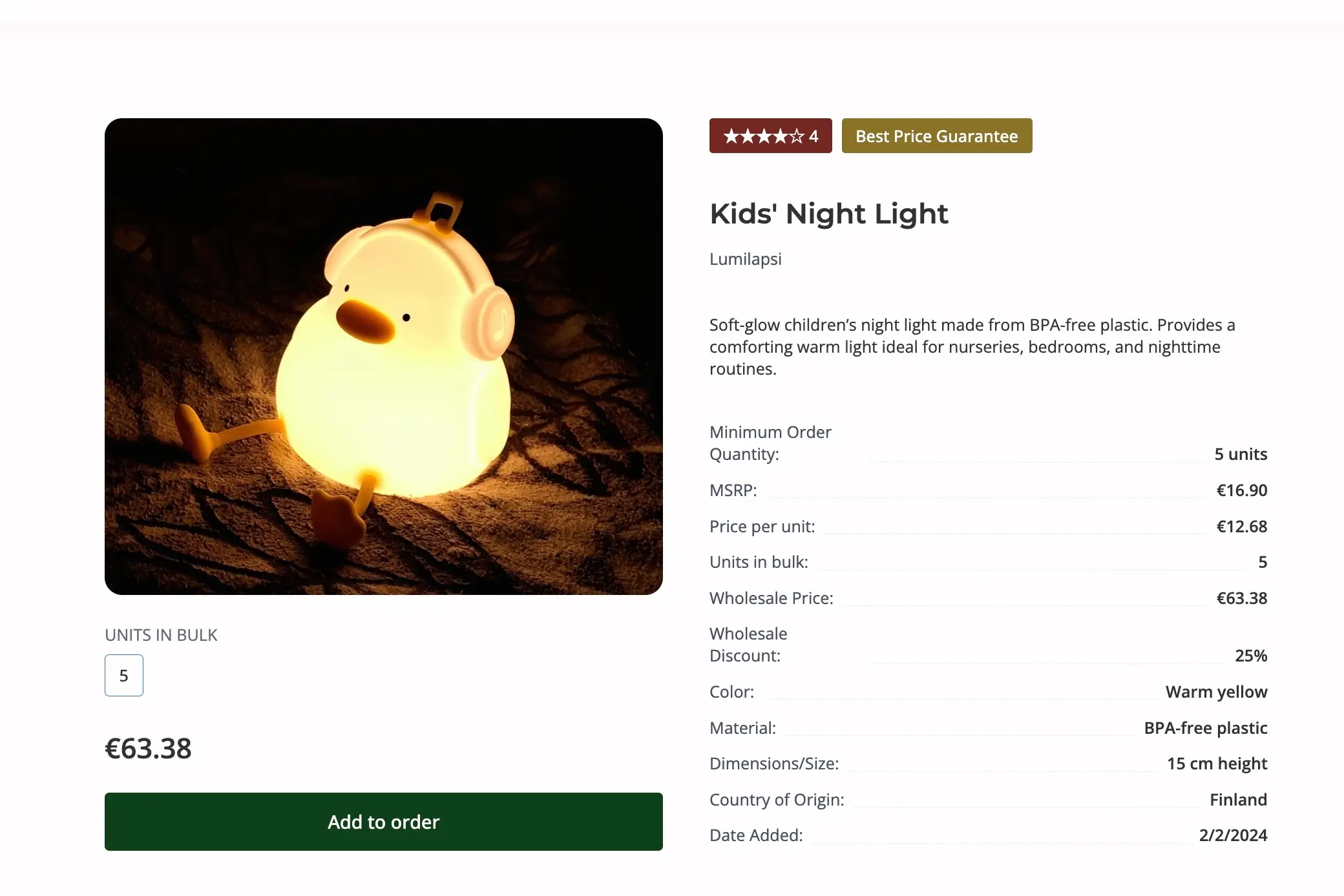
If your product data already lives in a spreadsheet, you're most of the way to a wholesale website already. The SpreadSimple Wholesale Store template is built specifically for that workflow, and you do not need to get into the depth of coding to create an entire online store.
What SpreadSimple no-code builder gives you:
- Google Sheets as your CMS. Update products, prices, and inventory in the sheet, and the changes sync to your live site. Your team can edit it together like any shared spreadsheet.
- A B2B-appropriate catalog structure: category pages with filters, detailed product pages that show MOQs and specs suited to bulk browsing.
- A professional, customizable design that is clean, mobile-responsive, and adjustable to your own branding.
- Inquiry and order options: per-product contact forms, WhatsApp ordering, and quote requests, with an optional cart for buyers you've already onboarded.
- SEO-ready setup: custom domain support, per-product meta tags, sitemap generation, and URL aliases for category pages.
SpreadSImple offers getting rid of developer dependency while having a live site built directly from a spreadsheet you already know how to use, and the ability to iterate the catalog as fast as you can edit a cell.
Find and onboard wholesale buyers

Unfortunately, no matter how great your online catalog is, its sole existence doesn’t guarantee sales. You still need to find, contact, and persuade the retailers to actually buy from you.
Where to find buyers:
- Trade shows. Industry-specific shows (beauty, apparel, gift, and so on) and regional wholesale markets are still one of the most reliable ways to meet serious buyers face-to-face.
- B2B marketplaces. Platforms like Amazon Business, Faire, and JOOR put your catalog in front of buyers actively looking for new wholesale suppliers, in exchange for a platform fee.
- Direct outreach. Research retailers in your niche and reach out directly — "I noticed you carry [similar brands]…" is a stronger opener than a generic pitch, especially paired with a sample order or consignment offer.
- Referrals. Ask your best existing buyers for introductions, and consider a small incentive for successful referrals.
- SEO and inbound. Ranking for searches like "[your category] wholesale supplier" puts you in front of buyers who are already looking for a new brand to carry, which is part of why a professional, findable website is a must.
A simple onboarding process once a buyer is interested:
- Respond fast. Aim for within 24 hours, confirm they're a legitimate retail business (a resale certificate is the standard proof), and send your full line sheet and terms.
- Start small. Offer a discounted sample pack or a low-MOQ first order, so both sides can test the relationship, with a clear shipping timeline.
- Set terms clearly. Payment method, net terms (if approved), the reorder process, and your return policy should all be spelled out up front.
- Support the relationship after the sale. Check in after the first order lands, offer merchandising support if relevant, keep them updated on seasonal catalog changes, and consider volume incentives to encourage reorders.
Pro tips for scaling your wholesale business
- Plan seasonally. Retail buyers order well ahead of the season. Holiday orders often start being placed in July, so launch new products 3 – 4 months before you expect them on shelves.
- Manage cash flow deliberately. Net terms create a real lag between your expenses and your revenue. Consider financing or a line of credit for inventory, and resist the urge to overstock before your reorder pattern is proven.
- Differentiate deliberately. Private label options, exclusive territory agreements, and customization give retailers a reason to choose you over a near-identical competitor.
- Automate reorder reminders. A simple seasonal email cadence, quarterly, at minimum, keeps you top of mind, and previewing new products to existing buyers first rewards loyalty.
- Close the feedback loop. Ask your buyers what's actually selling and what isn't, and be willing to cut SKUs that don't perform.
- Protect your retail partners. Undercutting them with DTC pricing is one of the fastest ways to lose a wholesale account. A MAP policy and a limited (or nonexistent) DTC presence can actually be a selling point for retailers.
Common mistakes to avoid
Chasing trendy, low-margin products. Viral products often have thin margins and short shelf lives. Evergreen categories with 40 – 60% margins and real reorder potential build a more durable business.
Setting MOQs too low. A $50 order can quietly lose money once you factor in shipping, payment processing, and your own time.
Building a DTC-style website for B2B buyers. Focus on creating a B2B-specific catalog with clear MOQs, a line sheet, and an inquiry flow.
Skipping buyer vetting. Require a resale certificate, check references where you can, and start new accounts on smaller terms until they've proven reliable.
Ignoring true unit economics. Wholesale pricing has to cover more than COGS — shipping, storage, payment fees, and your time all factor in. If the margin doesn't clear 40%, the pricing needs to be reconsidered.
Letting supply run inconsistent. Stockouts erode retailer trust. Keep buffer inventory, work with reliable suppliers, and be upfront about lead times.
Refusing to offer net terms. Requiring payment upfront limits you to the least established retailers. Net 30 for buyers who've proven themselves after a first order tends to unlock real wholesale growth.
FAQs
What are the best wholesale products for beginners?
Look for products with proven demand, healthy margins, manageable supplier MOQs, and no complex certification requirements. Categories like electronics, perishables, and heavily regulated products are harder to start with.
How much money do I need to start a wholesale business?
A realistic minimum is $3,000 – $5,000 for initial inventory, a website, and samples. It's possible to start smaller using pre-orders or print-on-demand, but traditional wholesale generally requires upfront inventory investment.
How do I find wholesale suppliers?
Common starting points include Alibaba or Global Sources for overseas manufacturing, Maker's Row for US-based production, trade shows, direct outreach to brands about distribution rights, and private label manufacturers.
Can I start wholesale with no inventory (dropshipping)?
To a point. Print-on-demand and some dropship suppliers do offer wholesale-style pricing, but established retailers generally prefer suppliers who hold inventory, since it means faster shipping and more consistent quality control. Dropshipping can be a reasonable way to validate demand before investing in inventory.
How do I handle returns and defects in wholesale?
A common approach is a 30-day return window limited to defects, not buyer's remorse, with credit toward a future order rather than a cash refund.
Do I need a business license to sell wholesale?
Generally yes. You'll typically need a registered business entity (an LLC is common), an EIN from the IRS, a seller's permit or resale certificate in your state, and the ability to collect resale certificates from your own buyers. Requirements vary by state and product category, so it's worth checking local rules before you launch.
Launch your wholesale catalog from Google Sheets with SpreadSimple
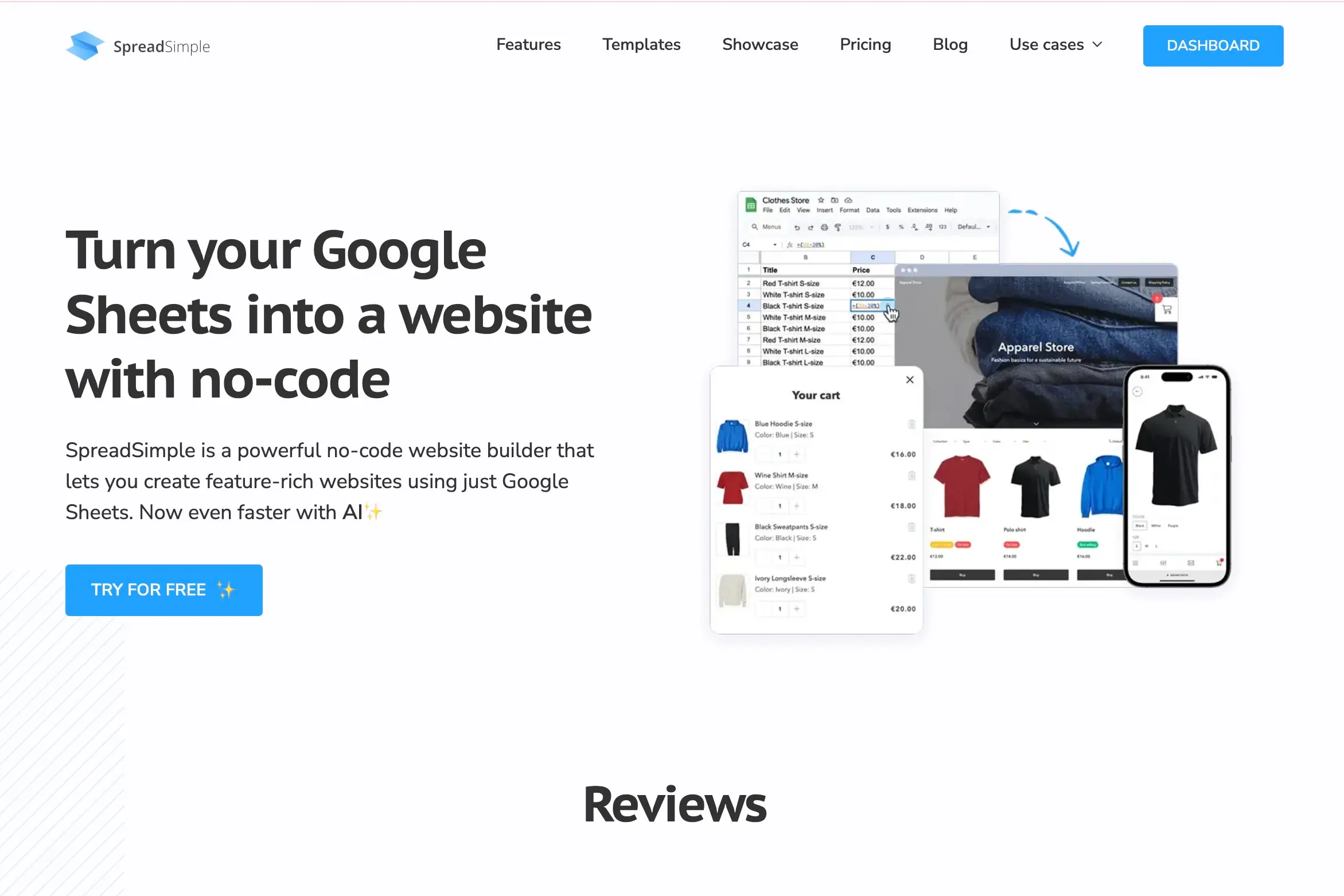
By this point, you've got a framework for choosing high-margin wholesale products, validating demand before spending on inventory, setting B2B pricing and terms, and understanding what a wholesale buyer actually needs from your website. The last step is turning that into something live.
With SpreadSimple, your product spreadsheet becomes a real B2B catalog without coding, developer fees, or a separate complicated system to keep in sync. Update a price or mark a SKU out of stock in your sheet, and your site reflects it immediately. Most sellers have a working wholesale website up in a matter of hours, not weeks, and you can start on a free plan before upgrading for a custom domain or advanced features.
Ready to turn your wholesale product list into a professional B2B catalog? Try out the SpreadSimple Wholesale Store template today.