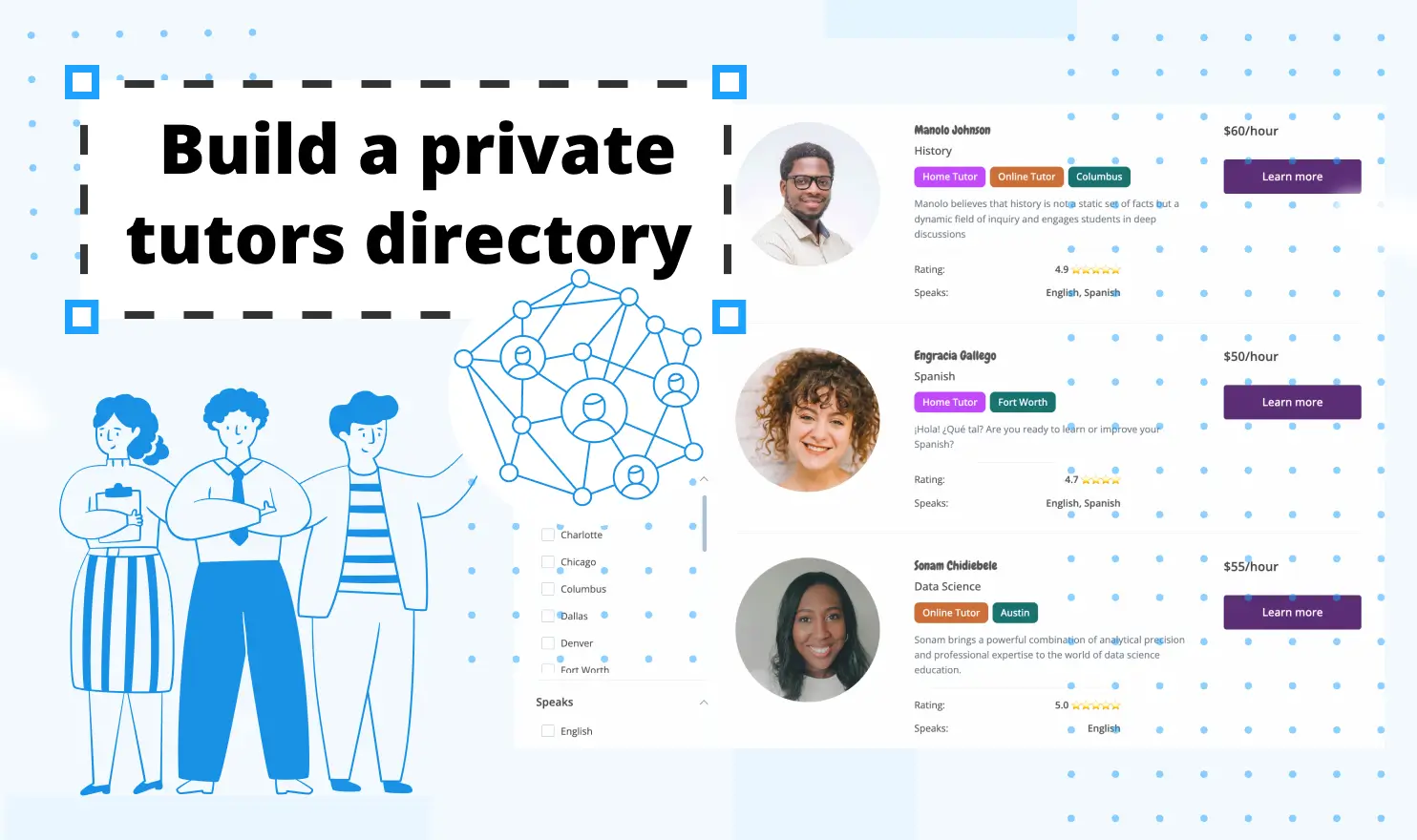
Nowadays, searching for a private tutor becomes a daunting task: people must browse hundreds of unverified profiles trying to find a competent, skilled expert. A simple, well-structured online tutors listing, with filters and sorting by subject, spoken language, city, and a verified ranking can out-rank and out-convert gargantuan monopolists simply by being smaller, better curated, and easier to trust. This guide walks through how to build a tutor directory from a blank page to a functional, SEO-friendly website with SpreadSimple, without getting into the details of coding.
Directory vs marketplace — pick the model you can actually run

Before proceeding to the actual website building stage, decide what you're actually creating, because "tutor marketplace" and "tutors directory" get used interchangeably, but they are not the same product.
- A directory lists tutors with contact details, rates, and specialties. Potential clients browse, filter, and reach out directly. You control who gets listed, there's no in-platform payment, and you can launch with a spreadsheet and a website builder.
- A marketplace runs payment processing between two sides who have never met before. It's a heavier product to build and to moderate, and it usually needs a developer or a dedicated marketplace platform.
Most operators starting out don't need a marketplace. Private tutor listings get you to market faster, are far cheaper to maintain, and still let you add lead fees or booking later once you know which subjects and cities actually convert. Start as a directory; upgrade to marketplace features only when demand proves you need them.
Choose your niche (subject, city, online-only, exam prep)
An educational platform that tries to cover every subject in every city competes directly with the big marketplaces and loses on content depth and SEO. Narrowing your focus is what makes the directory rankable and trustworthy.
Opt for one (or a tight combination) of these angles:
- Subject-first: a math tutor directory, a language-learning directory, or a coding-tutor directory. This works well for subjects with a strong ongoing search volume and specific parent concerns (exam boards, curricula, skill levels).
- Location-first: a private tutor website for a single city or region, useful where in-person sessions still matter and "near me" search intent is strong.
- Exam or milestone-first: SAT prep, university entrance exams, language certification. People searching for these terms are close to a buying decision and value a directory that clearly understands the exam.
- Online-only: an online tutoring website with no location filter at all, competing on subject depth and tutor subject knowledge and communication skills instead of geography.
Whichever angle you choose, highlight it in your homepage headline and meta title. "Tutors directory" is a broad, competitive keyword; "GCSE maths tutors in Manchester" is a specific one your platform can actually rank and convert on.
Recruit tutors before you launch
An empty tutors directory doesn't convert anyone, and a platform with a handful of profiles is pointless. Recruit your first batch of tutors before you announce the site publicly.
A few ways to discover professionals:
- Personal network and referrals — teachers, university students, and existing tutors you or your team already know are the fastest first listings to secure. It helps build a reliable, trustworthy core providing top-quality services.
- Outreach to tutoring groups and forums — Facebook groups, subject-specific communities, and local parent forums often have tutors actively looking for more visibility. Make sure to verify the potential candidates: if someone can’t deliver expert tutoring, it will cause a systemic loss of user trust.
- Free listing offer for early adopters — waiving your fee (if you plan to charge one) for the first cohort in exchange for a complete profile and a testimonial is a fair trade in the early weeks.
- A short application form — even a lightweight form asking for subjects, qualifications, and a short bio gives you consistent data to populate listings instead of chasing tutors individually for each field.
Aim for a minimum of 15 – 20 solid profiles across your chosen niche before launch — enough that a visitor sees genuine choice on their first search, and few enough that you can personally vet each one.
Pro tip: What can no-code do?
If you are on a limited budget, you can build a fully functional website with the SpreadSimple free plan: it lets you create a website with up to 50 experts, dedicated detailed profiles including specialties, experience, pricing, and locations. Website visitors can apply search filters to find what they are looking for in no time and contact the professional directly via a Google Form. Note that the free plan includes SpreadSimple branding and domain.
What every tutors directory website needs

Once you have tutors lined up, the platform itself needs a specific set of features. With no-code builders, you don't need custom development. The website creation process usually features drag-and-drop interfaces, language prompts for AI tools, and pre-built components users can easily modify according to their vision.
Main features every tutors directory needs:
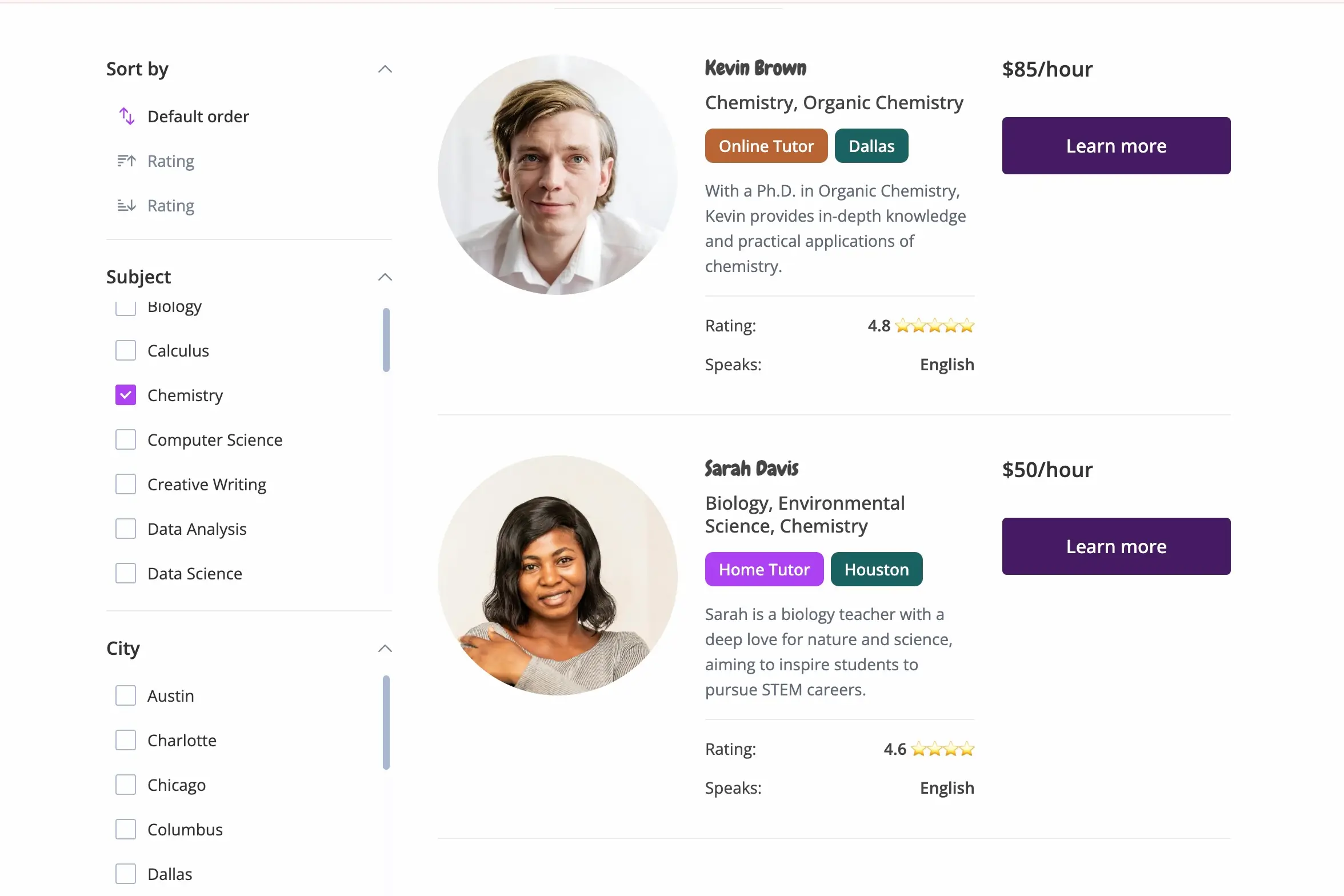
- A searchable list view with filters for subject, location, price, and format (online or in-person).
- Individual tutor profile pages with a photo, bio, qualifications, and a way to get in touch.
- A simple submission or application path so new tutors can request a listing after launch.
- Clear navigation by category like subject pages, city pages, or both, depending on your niche.
- A fast, mobile-friendly layout, since the majority of internet users browse on smartphones, and search engines like Google prioritize mobile-optimized sites in their rankings.
The SpreadSimple Private Tutors Directory template covers all the essential pre-built features, including filters, tutor list, and detail pages. You can also embed a contact form as an iframe, giving users a direct line to any qualified educator. Every tutor profile is a row in a connected Google Sheet. To add a tutor, simply add a new row, and the website updates automatically. A curated “Request a Tutor” form serves two key purposes. For students, it creates a friction-free way to get personalized support. For you, it doubles as market research, revealing high-demand subjects so you can optimize your online platform for higher conversions.
Listing fields that convert (subject, level, rate, format, location)
The fields on a tutor profile decide whether a customer trusts it enough to reach out. Keep the list focused on what actually gets filtered or compared, rather than padding it with fields nobody reads.
| Field | Relevance |
|---|---|
| Subject(s) and level | Organizing tutors by the level of the student is the first filter almost everyone applies: primary, secondary, university, test prep, postgraduate, etc. |
| Rate and format | Price and whether sessions are online or in-person |
| Location or service area | Essential for in-person tutoring |
| Qualifications and experience | Degrees, certifications, and years tutoring — the core trust signal on the page |
| Availability | Even a rough weekly availability saves back-and-forth before the first message |
| Short bio and teaching style | What separates one profile from an echelon of similar-looking listings |
| Contact method | A direct link, form, or booking button. This is the single most important call to action on the page |
Resist the urge to copy every field from a general-purpose marketplace. A tutors directory with seven well-chosen fields per listing reads as more curated and converts better than one with twenty half-filled ones.
Build trust — reviews, verification, clear policies

Since most visitors are parents seeking educators for their children, trust signals carry far more weight on tutoring platforms than on standard e-commerce sites.
- Verification badges for tutors whose qualifications or ID you've actually checked, even a simple "verified" label makes a measurable difference.
- Reviews or testimonials on each profile: even three or four genuine quotes outperform a directory with no social proof at all.
- A visible vetting policy: a short "How we screen tutors" page explaining your process builds confidence before a potential customer even opens a profile.
None of this needs to be complex at launch. A short bio, one verification badge, and a couple of testimonials per profile are enough to separate your directory from anonymous endless listings.
Launch and promote with local / subject SEO pages
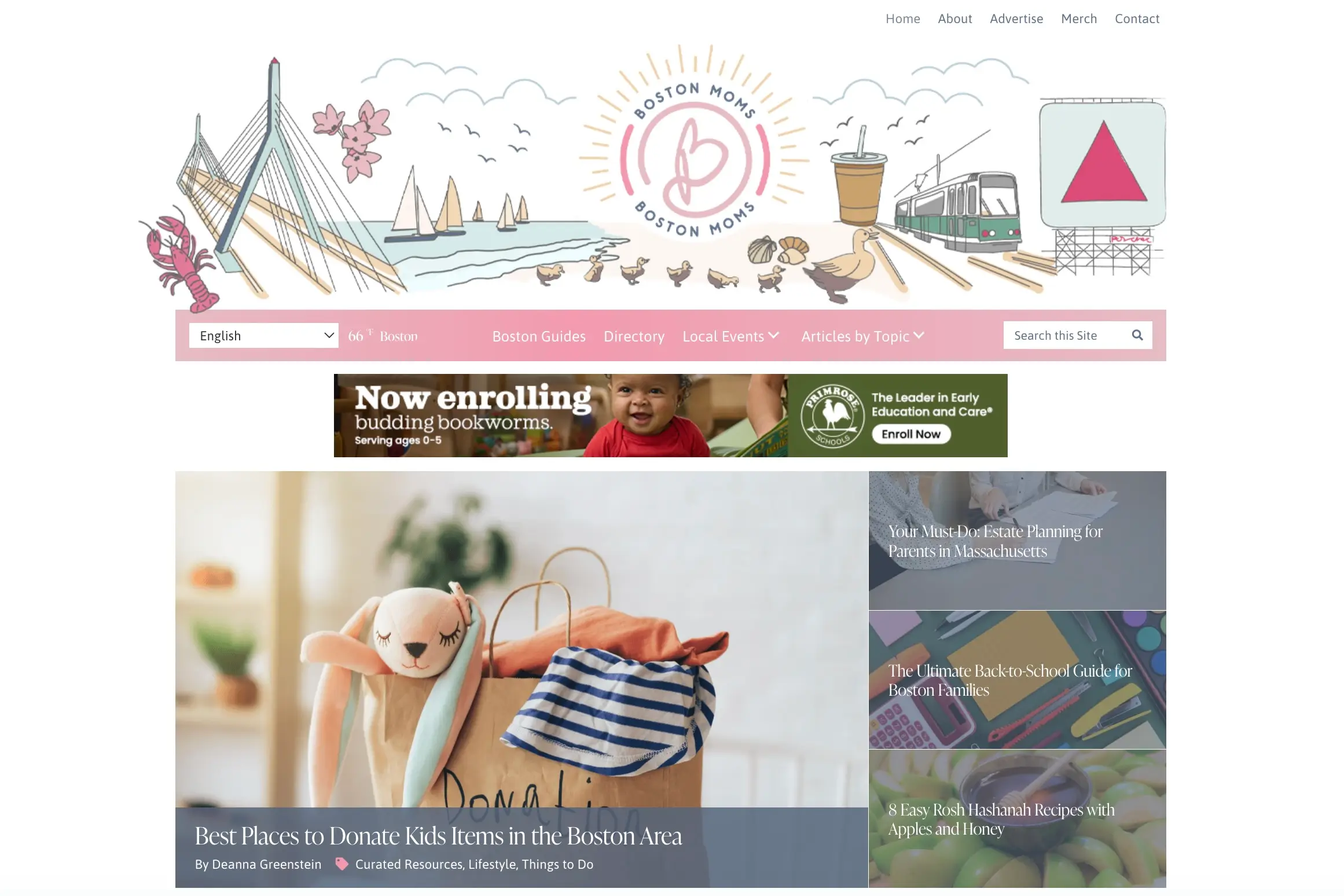
Once the directory is live, the fastest organic growth can be usually achieved through a set of narrow, well-targeted pages. If location matters to your website’s concept, add city pages, each linking to the relevant filtered list. Subject pages can target long-tail searches. A short blog or resource section answering questions like “What to look for in a private tutor” provides content that pulls in early-stage searchers and links back to your listings. Additionally, explore relevant local directories and parent communities: getting listed on these sites and forums brings both referral traffic and backlinks.
Monetize — featured listings, lead fees, subscriptions
A tutors directory has several monetization paths that don't require booking or payment infrastructure on day one:
- Featured or highlighted listings when tutors pay to appear at the top of a category or get a badge that stands out in the list.
- Paid submission or subscription like a flat fee to be listed, or a recurring fee for tutors who want their profile to stay active and prioritized.
- Lead fees, meaning charging tutors per inquiry or contact request generated through the directory.
- Sponsored content or partnerships: tutoring-adjacent businesses (course providers, exam-prep material, ed-tech tools) sponsoring a resource page or category.
Pick one model to start rather than chasing all four at once. A single, clearly explained pricing page converts better than a confusing mix of options. For a full breakdown of how directory monetization models compare and when to introduce each one, check out our guide on how to monetize a directory website.
Common mistakes to avoid
- Launching with too few listings. A directory with five tutors in one subject looks thin; wait until you have real coverage in your chosen niche.
- Copying a generic marketplace's field list. More fields isn't more trust. It causes more friction, and half-empty profiles undermine the ones that are filled out.
- Skipping verification entirely. Even a lightweight check (ID plus one reference) is worth doing before a profile goes live.
- No clear niche. A directory that lists every subject in every city everywhere competes with marketplaces that have far more listings and budget than you do.
- Treating the directory as "set and forget." Stale profiles, outdated rates, and tutors who stopped responding erode trust fast. Plan for regular upkeep from day one.
FAQ
How do I start a tutoring directory with no coding experience?
Use a no-code website builder, such as SpreadSimple's Private Tutors Directory template. You fill in tutor details as rows in a Google Sheet, and the site generates searchable listings and profile pages automatically.
What's the difference between a tutors directory and a tutor marketplace?
A directory lists tutors so website visitors can browse, filter, and contact them directly; a marketplace adds accounts, booking, and payment processing between both sides. Most operators should start with a directory and add marketplace features later if demand justifies the extra complexity.
How many tutors do I need before I launch?
Fifteen to twenty verified, complete profiles in your chosen niche is a reasonable minimum for a visitor to see genuine options on their first search.
How do I recruit tutors for a directory before launch?
Start with your personal network and any tutors you already know, then reach out in relevant tutoring groups, forums, and parent communities. A short application form asking for subjects, qualifications, and a bio makes it easy to turn responses into consistent profile listings.
How do I monetize a tutors directory?
Common models are featured or highlighted listings, a flat or recurring fee to be listed, lead fees per inquiry, and sponsorships from tutoring-adjacent businesses.
How to start a tutoring business online: Launch your tutors directory from Google Sheets
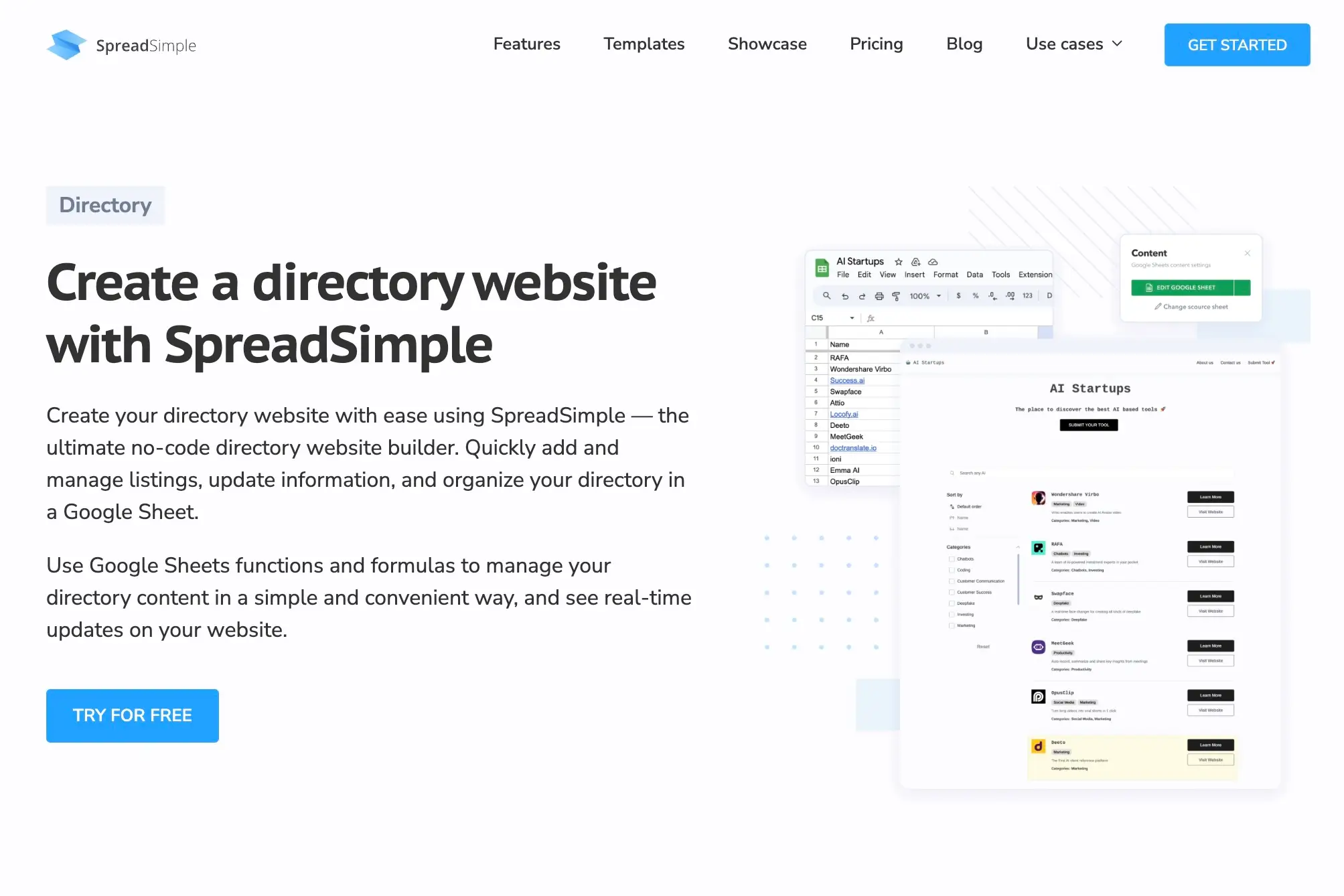
The fastest way to go from an idea to a live tutors directory is to skip custom development entirely. With SpreadSimple's listings and directory tools, your Google Sheet becomes a user-friendly content management system. If you're weighing SpreadSimple against other builders for the long run, our honest comparison of directory website builders for maintaining data after launch covers how each no-code platform handles bulk edits and ongoing maintenance.
Take a look at your options, choose what works best for your goals, and take that first step. We’re rooting for your success!