How to sell AI prompts online (Build a prompt collection people pay for)
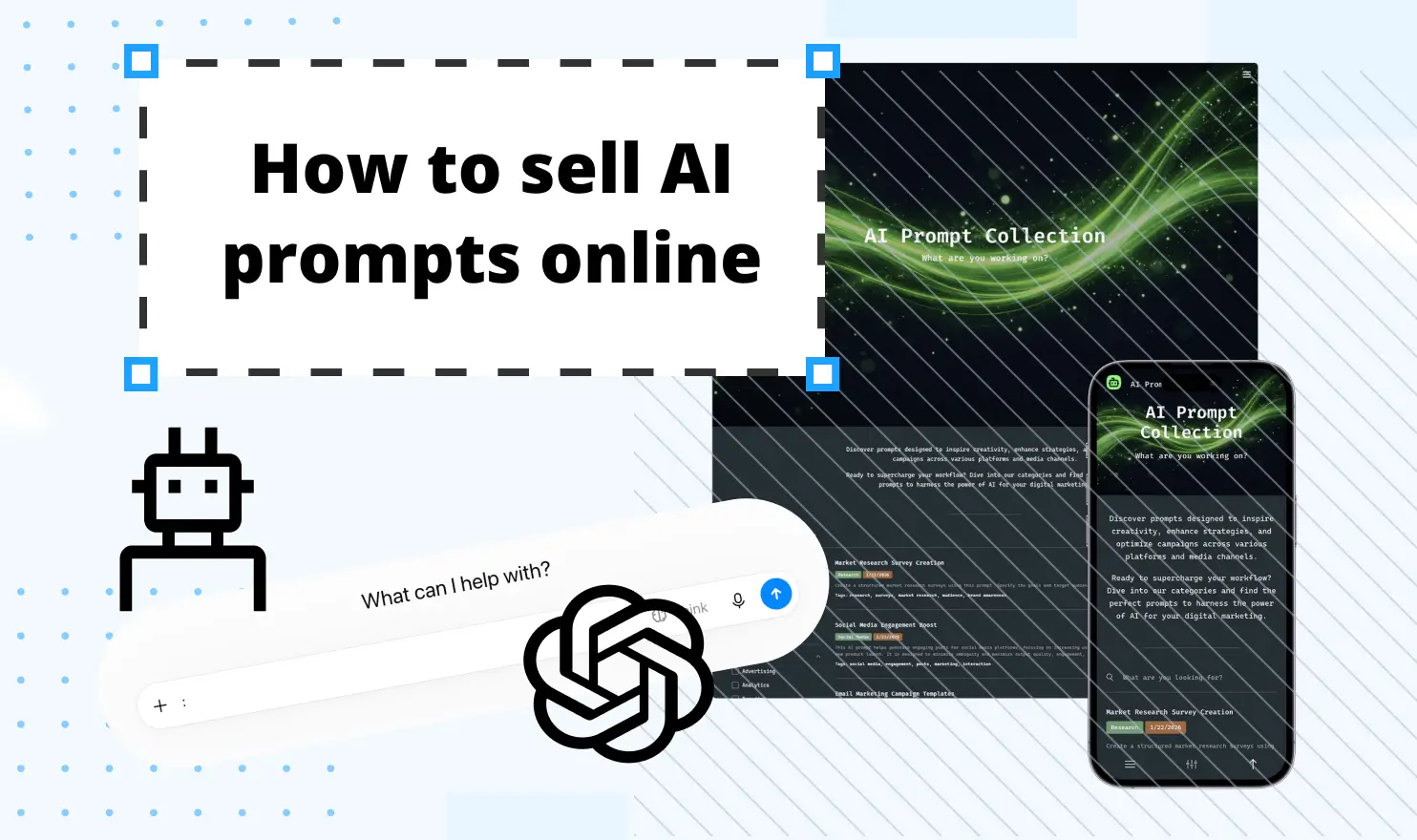
Over a couple of years, AI has become an integral part of our lives. You can love or hate it, but you can’t deny its omnipresence, which presents great business potential. While some individuals study the behavioral patterns of next-gen technologies in depth, others want to use all the benefits without getting into the details of prompt engineering. This is your opportunity and your target audience. Keep on reading to find the ultimate strategy, free solutions, and smart business tips to help you join the viral business niche in no time.
Can you still make money selling AI prompts?

Back in 2023, a brief, well-worded prompt felt like a true wizardry. Today, ChatGPT, Claude, and Gemini all understand plain-language requests well enough that a buyer rarely feels the need to pay for one clever sentence. That's exactly why the echelon of one-off “50 ChatGPT prompts for productivity” packs stopped converting today.
What still sells is a prompt pack built around a specific, repeatable job: a real estate agent who needs consistent listing descriptions, a Shopify seller who needs product copy at scale, a freelance illustrator who wants reliable Midjourney prompts for a signature style, or a YouTube blogger who needs keyword-rich video descriptions. These buyers aren't paying for the words in the prompt, they're paying for the testing, the variables already mapped out, and the time they save not having to figure it out themselves.
If your prompt pack can be replaced in thirty seconds by typing your product description into ChatGPT, it won't sell. If it saves someone an afternoon of trial and error on a task they do every week, it will.
Pick a buyer and workflow niche (not generic “ChatGPT tips”)
The major reason causing prompt packs’ failure is that they're built for “everyone who uses AI,” which in reality means no one in particular. Before writing a single prompt, you should define your potential customer and analyze their workflow during the pre-AI era.
Two ways to target the right audience:
- By profession or business type: think AI prompts for real estate agents (listing descriptions, follow-up emails, market update posts), AI prompts for freelance copywriters (client proposals, ad variations, outline generation). The obvious, alluring benefit uniting all the above is the time-saving potential: the ability to automate routine tasks and unlock the most precious commodity — time — allowing your clients to focus on strategic work that requires a human presence.
- By tool and output: offer ChatGPT or Gemini prompts for a specific writing task, or sell Midjourney prompts revolving around one visual style, rather than a general-purpose bundle.
A pack titled “Instagram caption prompts for boutique skincare brands” will outsell “500 marketing prompts” every time, because the buyer can see the clear connection before they even open the description. Niche packs also let you charge more, since the customer isn't comparing your price to a free ChatGPT tab — they're comparing it to the hours they'd otherwise waste testing various options.
Single prompts vs. packs and systems
There are three variants of product you can build your business around, and each one requires a different level of prompt engineering knowledge for digital products before launch.
Single prompts. These are cheap to make and to buy. Unfortunately, they are the hardest to defend against copying: a buyer can simply screenshot the prompt and never return.
Prompt packs. A themed collection (10 – 50 prompts) around one workflow, usually with clearly marked variables, so the buyer can effortlessly swap in their own product, client, or topic. This is the great opportunity for ambitious individual entrepreneurs giving them enough depth to justify any price as well as not so much scope that testing becomes a full-time job.
Prompt systems. Chained prompts that walk the buyer through a full process. For example, imagine a five-step sequence that takes a raw blog idea from outline to draft to SEO edit. Systems take longer to build and test, but they're the hardest for anyone to replicate from a screenshot, which makes them the most defensible product on this list.
Whichever level you choose, test every prompt across the current versions of the models you're targeting before you list it. Models get updated, and something that worked perfectly six months ago can produce noticeably different output today. A pack that hasn't been retested since launch is the fastest way to collect refund requests.
Marketplaces vs. your own prompt collection store
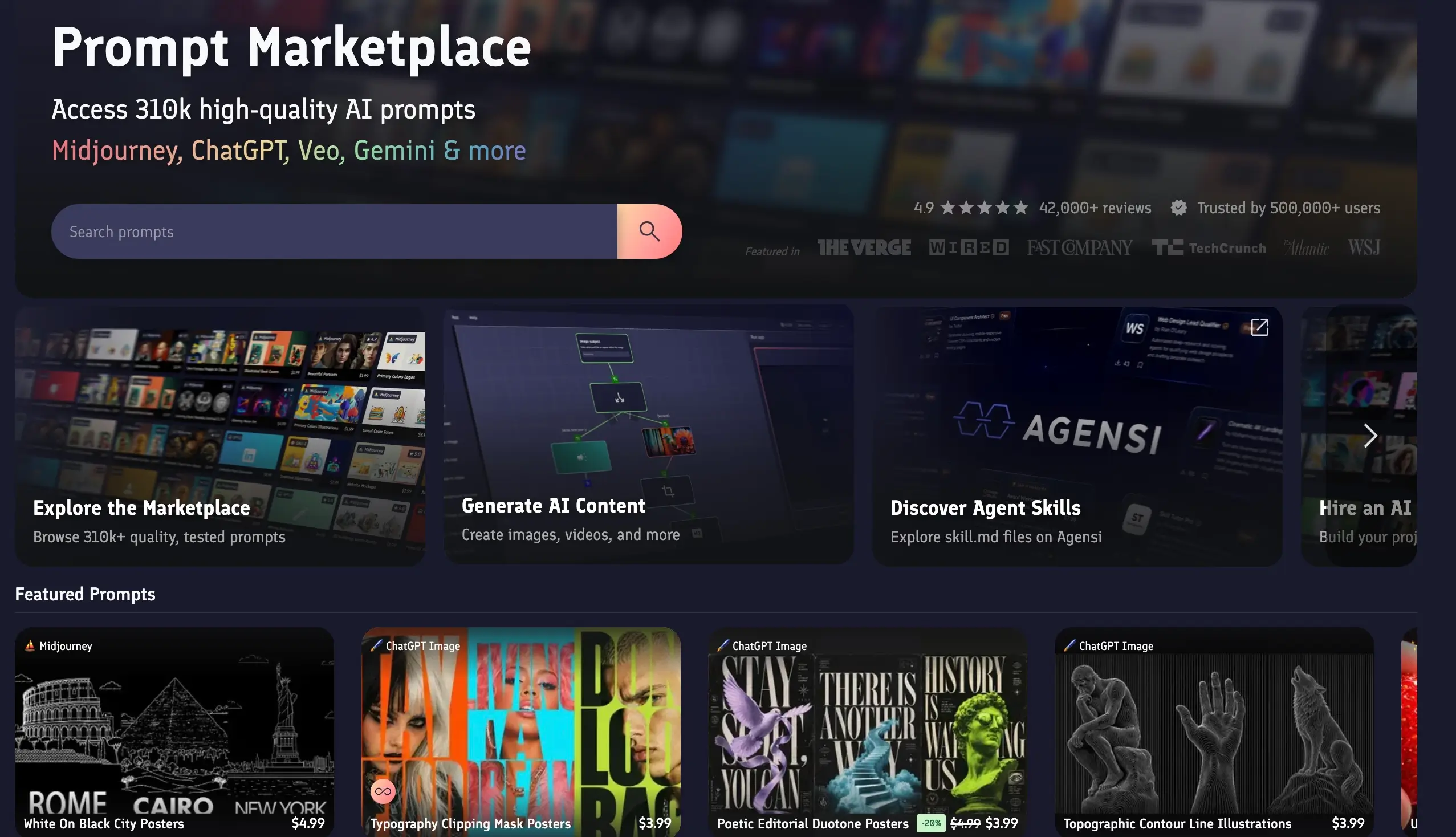
When choosing where to sell their prompts, most sellers usually have two options: PromptBase (opens new window) or their own online platform. Eventually both options are needed, just not at the same time.
Marketplaces (PromptBase (opens new window), Etsy (opens new window), Gumroad (opens new window)). Like on any other colossal platform, you get built-in browsing traffic and a checkout that's already trusted by buyers, which is genuinely useful when you're testing whether a niche has demand at all. But marketplaces always take a cut of every sale, your listing sits next to dozens of competitors, and you rarely get the buyer's email address, so there's no way to sell them your next pack directly.
Your own prompt collection store. This option guarantees a full control over pricing, no marketplace fee, and every sale adds an email address to a list you own. The catch is that you're responsible for bringing your own traffic, which is not that easy. A store with zero visitors converts at exactly zero, no matter how good the products are.
A workable sequence: list two or three packs on Gumroad or PromptBase first, since both have low setup friction and existing buyer traffic. If they sell, you've validated the niche with real money instead of guesswork. From there, build your own catalog site so future packs, bundles, and repeat customers go through a store where you keep the full margin and the customer relationship.
How to sell prompts on Gumroad
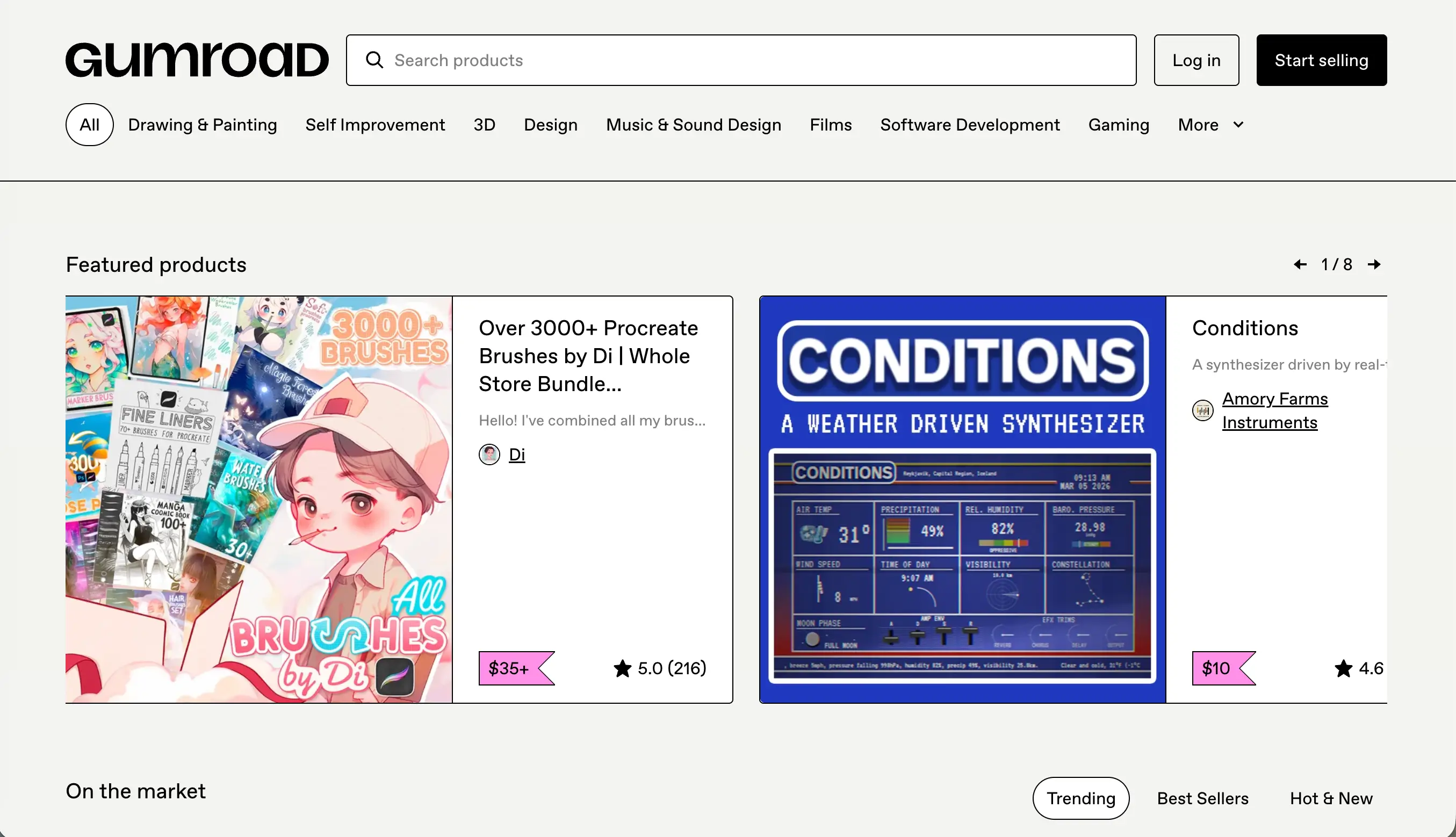
This platform is considered the most beginner-friendly way to sell digital products online, and many people start their online business here, without a need to build an entire website. Create a product listing, upload your prompt pack as a downloadable file (PDF, text file, or a linked Notion doc), write a description that leads with the workflow it solves rather than the prompt count, add two or three demo output screenshots, and set your price. Gumroad handles the checkout and delivery automatically, which makes it a fast way to get your first pack live while you decide whether to build a dedicated site.
Design a catalog buyers can browse and trust
Whether you're on a marketplace or your own website, the same trust signals define whether a visitor becomes a buyer:
- Sample outputs. Show the actual result the prompt produces, not just the prompt text. For image prompts, this means real generated images; for writing, a short before/after excerpt.
- Clear categorization. Group packs by niche, model, or use case so a buyer scanning your catalog finds their situation in a few seconds, not a few minutes.
- A short preview of the prompt itself. Buyers hesitate to pay for something they can't evaluate at all. Showing the first line or the variable structure (without giving away the full pack) builds enough confidence to convert.
- Reviews or a usage count, once you have them. Even a handful of star ratings does more for conversion than another paragraph of marketing text.
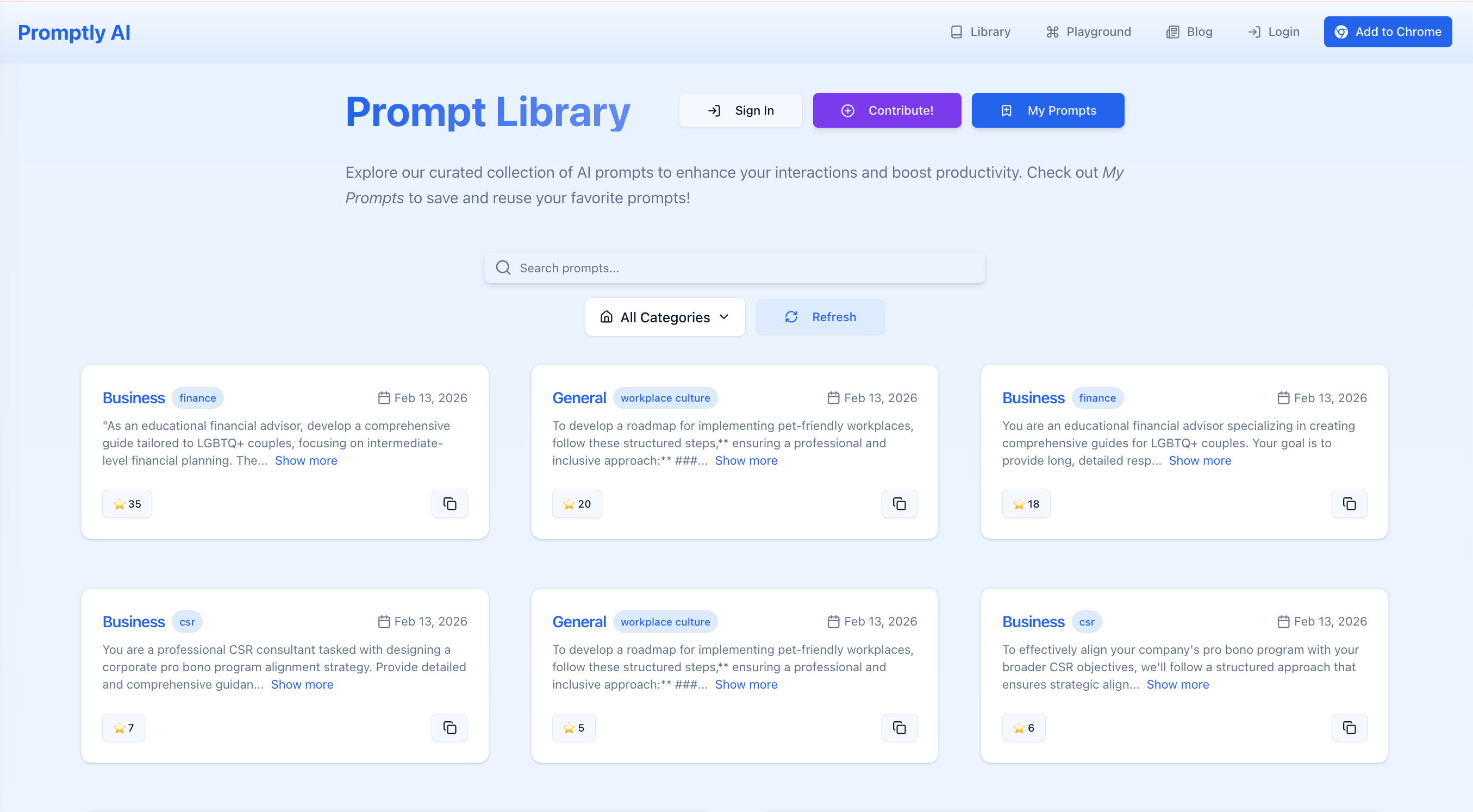
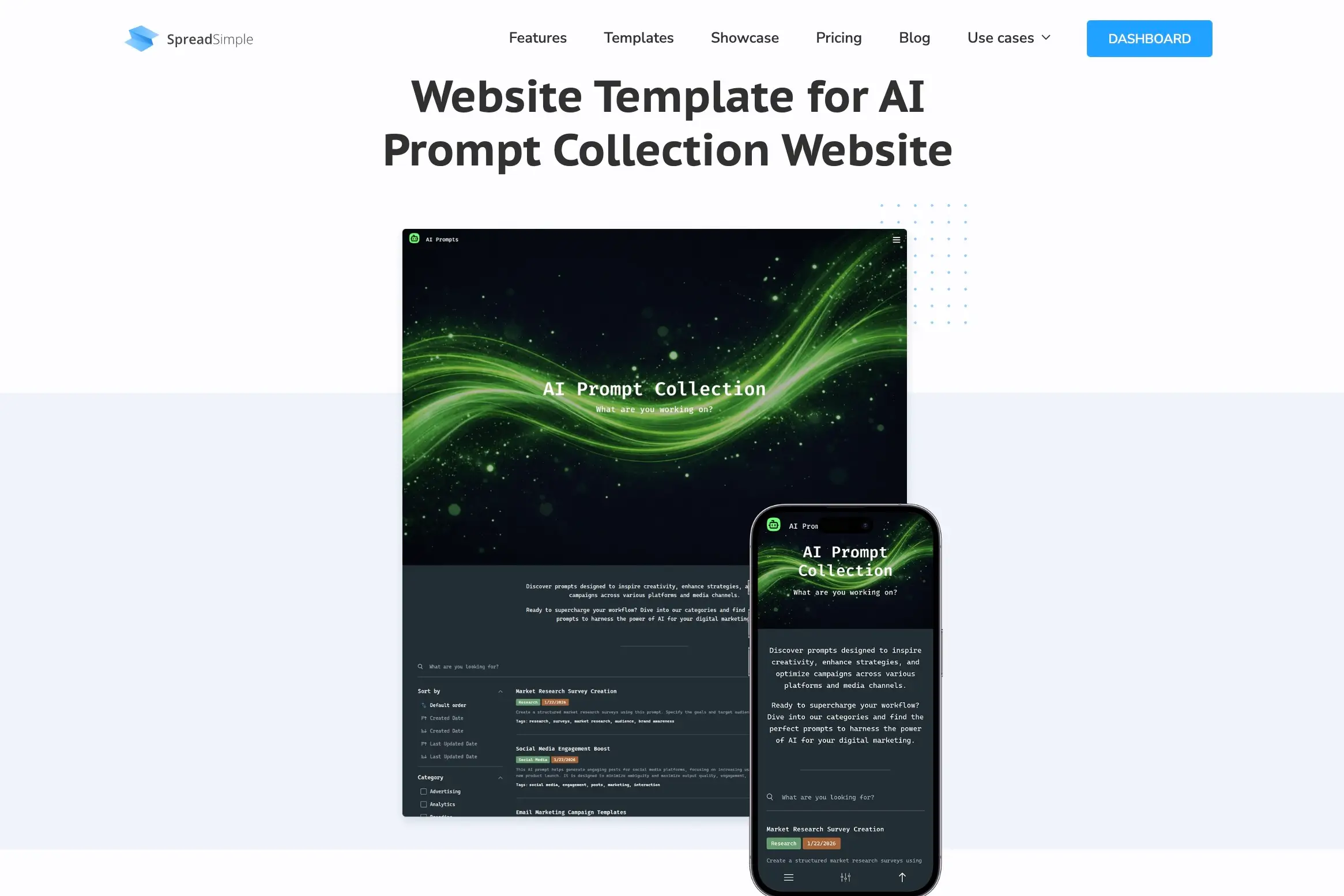
If you're setting this catalog up yourself, SpreadSimple's AI Prompt Collection template lets you manage the whole storefront — categories, images, demo outputs, pricing, etc. — from a well-known, easily manageable source, a Google Sheet, so adding a new pack is a matter of adding a row rather than editing a website. You don’t need to get into coding, which leaves you with ample time to optimize your product and run a proper marketing campaign.
Package delivery — downloads, licensing, updates
How the buyer actually receives the pack matters nearly as much as its content. This is what shows the clear difference between a professional approach and an amateur, unreliable grasping for quick profits with zero care for customers. You should always remember that a business needs not just any buyers, but recurring sales, meaning that people are willing to return to your product and recommend it to others.
Delivery format. PDF and plain text files are the most portable and the easiest for a buyer to paste from. Notion templates work well for prompt systems with multiple linked steps. Whatever format you choose, make sure it opens cleanly on both desktop and mobile: a large share of buyers open their download link on a phone.
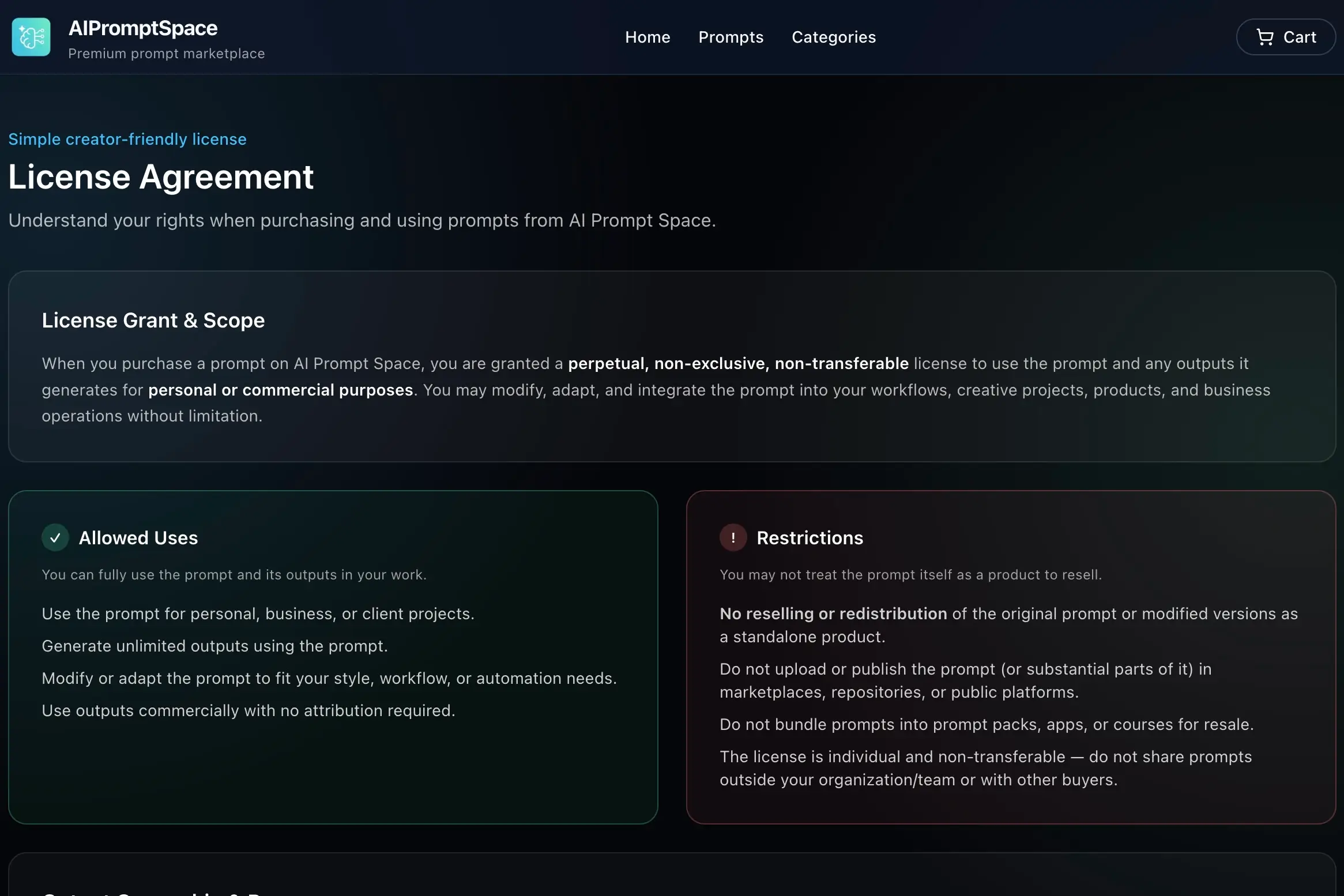
Licensing. Spell out, in plain language, whether the buyer can use the outputs commercially, whether they can resell or redistribute the prompts themselves, and whether a single purchase covers one business or a whole team. Vague licensing is one of the most common sources of refund requests and support messages.
Updates. AI models change, and you should decide upfront whether buyers get free updates when you retest and revise a pack, or whether updates are a separate purchase. Offering free updates for the current model generation is a strong trust signal and a reasonable expectation for anything priced above a few dollars.
Price packs and promote with demo outputs
Figuring out how to price AI prompts confuses almost every new seller, mostly because they price by effort (“it only took me an hour to write”) instead of by the value the output creates for the buyer.
A few starting points:
- Anchor to the task, not the word count. A five-prompt pack that reliably produces client-ready product descriptions is worth more than a fifty-prompt pack of generic writing starters, even though it's shorter.
- Tier your catalog. A low-cost single pack ($5 – $15) gets people in the door; a bundle or “vault” of related packs ($25 – $60) captures buyers who want the full workflow; a done-for-you or custom option captures the top of the market.
- Promote with proof, not adjectives. “Save hours” means nothing without a screenshot. If you sell Midjourney prompts, a side-by-side of the raw prompt and the resulting image will convert better than any description. If you sell ChatGPT prompts, show the actual output text.
- Where you promote depends on the format. Visual prompt packs do well on Pinterest and Instagram, where the demo output becomes the ad itself. Writing and workflow packs tend to convert better through short posts on X or LinkedIn that walk through the before-and-after of a real task.
Grow with bundles, email, and SEO landing pages
Once you have a few packs selling, the next step is achieving growth. Like in any other business, it comes from getting more value out of the buyers you already have and attracting new ones.
- Bundle related packs. A buyer who purchased your real estate listing pack is a strong candidate for a follow-up email pack for the same audience. Bundling two or three related packs at a discount usually maximizes average order value more than adding new, unrelated products.
- Capture email from day one, even on a marketplace. Offer a small free prompt as a lead magnet in exchange for an email address, then use that list to announce new packs directly instead of relying on marketplace browsing alone. For more information on how to organically get your customers’ email, check out this post: What Is a Squeeze Page — And Why Your Business Needs One Right Now
- Build a prompt library website with landing pages per niche. Instead of one general “AI prompts” page, create separate pages targeting phrases like “AI prompts for bloggers” or “AI prompts for freelance copywriters.” Each page should target its own niche keyword, show relevant sample outputs, and link to the specific pack that fits — this is what turns a search for a narrow problem into a sale, rather than losing that visitor on a crowded homepage. For more tips on how to sell digital products online, read this article: How to sell digital downloads: a complete guide
Common mistakes to avoid
- Selling raw, generic prompts that a buyer could recreate by describing what they want in plain language. If AI can already produce the same result from a one-line request, there's nothing worth paying for.
- No proof of output. Listings without demo screenshots or sample text ask buyers to pay on trust alone, and most won't.
- Vague or missing licensing terms creating disputes after the sale.
- Letting packs go stale. A prompt pack that hasn't been retested since a model update quietly stops performing, and buyers notice it immediately.
- Never building an audience milieu, so every launch starts from zero traffic instead of a list of people who already bought from you once.
FAQ
How much can you realistically earn selling AI prompts?
The income varies widely and depends almost entirely on niche and traffic, not on how clever the prompts are. Sellers who target a specific professional workflow and promote with real demo outputs tend to outperform sellers with broad, generic packs by a wide margin, even at a similar price point.
Do you need permission to sell prompts for ChatGPT or Midjourney?
You don't need a license from OpenAI or Midjourney to sell prompts you wrote yourself, since a prompt is your own text. What you do need to check is each platform's terms for commercial use of the outputs your prompts generate, especially if you're reselling AI-generated images.
PromptBase vs. own store — which should you start with?
Start on a marketplace with existing traffic. It gets your first packs in front of buyers immediately, which is the fastest way to learn whether a niche sells at all. Once you have proof, move future packs and repeat buyers toward your own store, where margins and email capture are both better.
How do you know if a prompt pack idea will sell?
Look for a task people already do repeatedly and complain about like a listing description, a client proposal, or a weekly report rather than a task they'd only do once. If the same buyer needs the output again next week, they're a candidate for a bundle or repeat purchase.
Can you sell AI-generated images along with your prompts?
Yes, many Midjourney and Stable Diffusion sellers bundle sample images with the prompt pack as proof of output. Just be clear in your licensing about whether the buyer is purchasing the prompt, the sample image, or both, since the two carry different usage rights.
Launch your AI prompt collection site from Google Sheets with SpreadSimple
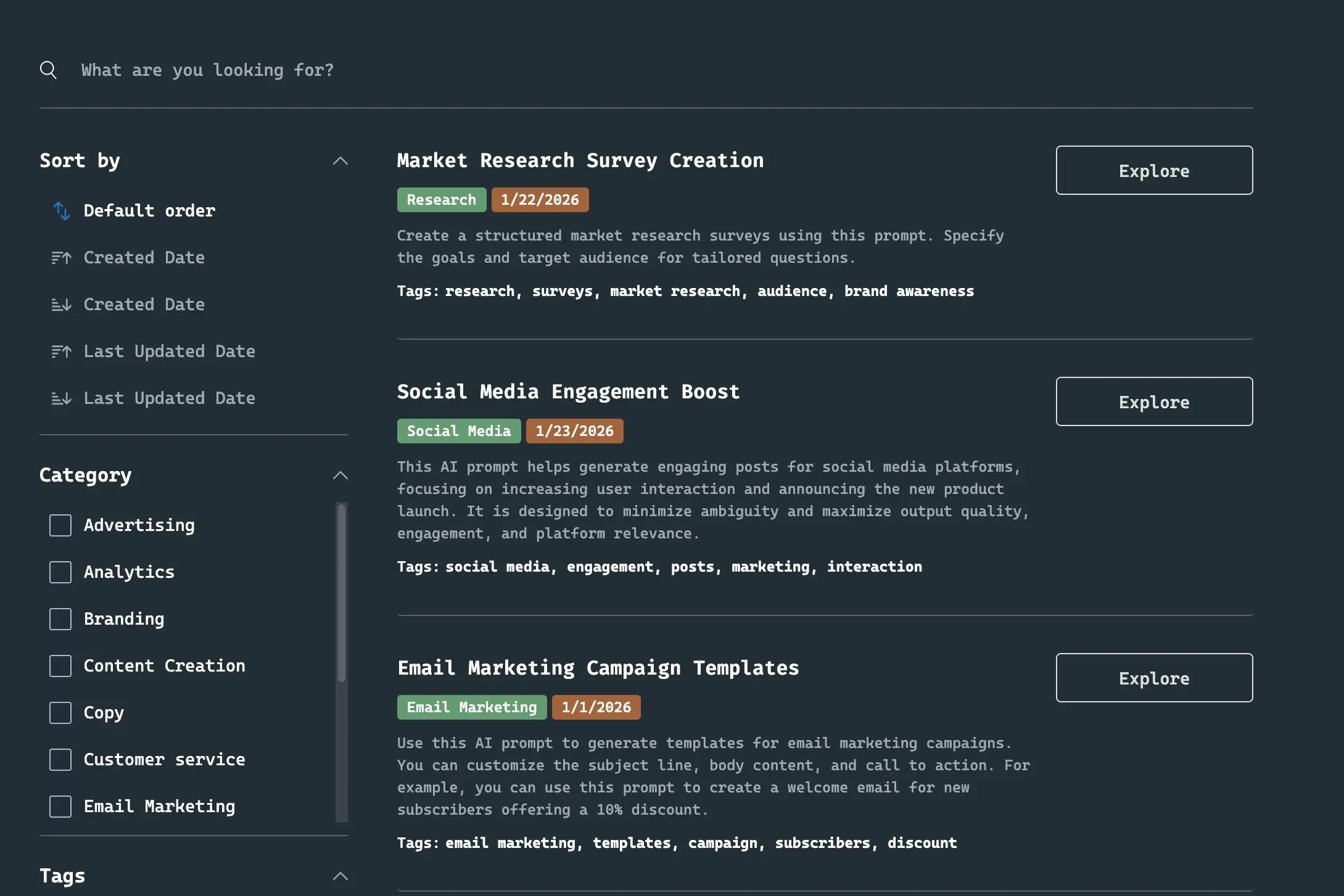
Once you've validated a niche on a marketplace, the fastest way to move to your own catalog is a sleek website any non-technical user can manage without being bothered by code. SpreadSimple lets you build a browsable AI prompt collection store with categories, demo outputs, pricing, and checkout from a Google Sheet you already know how to edit. Build and launch for free today, then unlock advanced features once your model is proven.
Explore SpreadSimple's AI Prompt Collection template and pricing plans to launch your own prompt store.